
In today’s digital world, many businesses use the terms branding and marketing interchangeably. While they work closely together, they are not the same thing. Understanding the difference between branding and marketing can help businesses build stronger customer relationships, improve visibility, and grow more effectively online.
For small and growing businesses especially, confusing branding with marketing often leads to inconsistent messaging, weak customer trust, and poor long-term growth. The truth is, marketing may attract customers, but branding is what makes them remember you.
The Difference Between Branding and Marketing
What Is Branding?
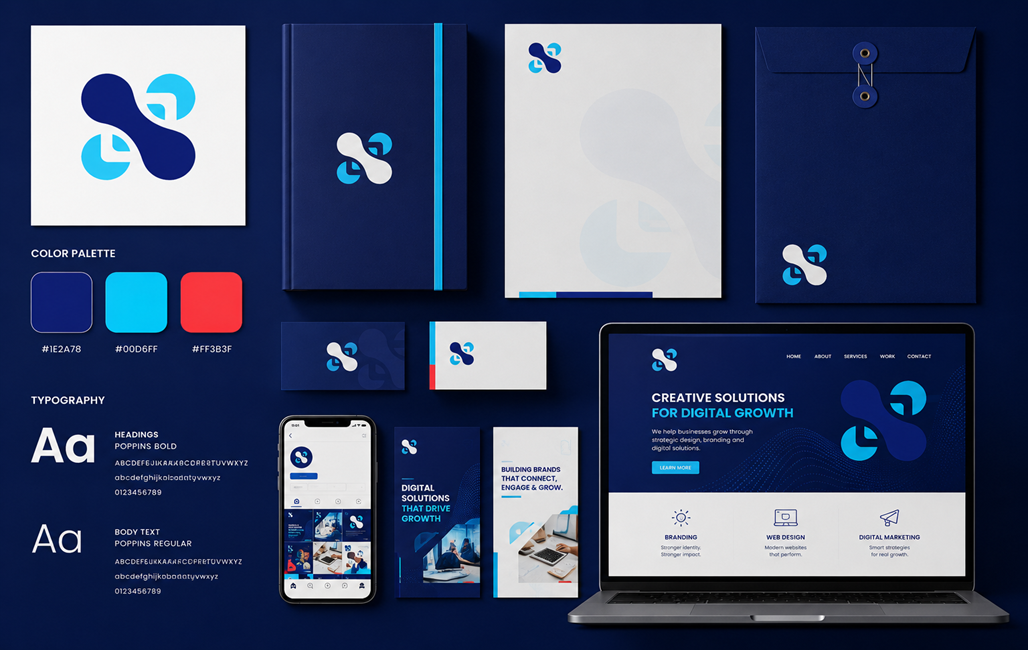
Branding is the identity of your business. It is how people perceive your company, products, and services. Branding goes beyond a logo or color palette, it includes your values, personality, messaging, customer experience, and the emotions people associate with your business.
A strong brand answers questions like:
- Who are you?
- What do you stand for?
- Why should customers trust you?
- What makes your business different?
Think of branding as the personality of your business.
Elements of Branding
- Logo design
- Brand colors
- Typography
- Tone of voice
- Brand values
- Website appearance
- Social media identity
- Customer experience
What Is Marketing?
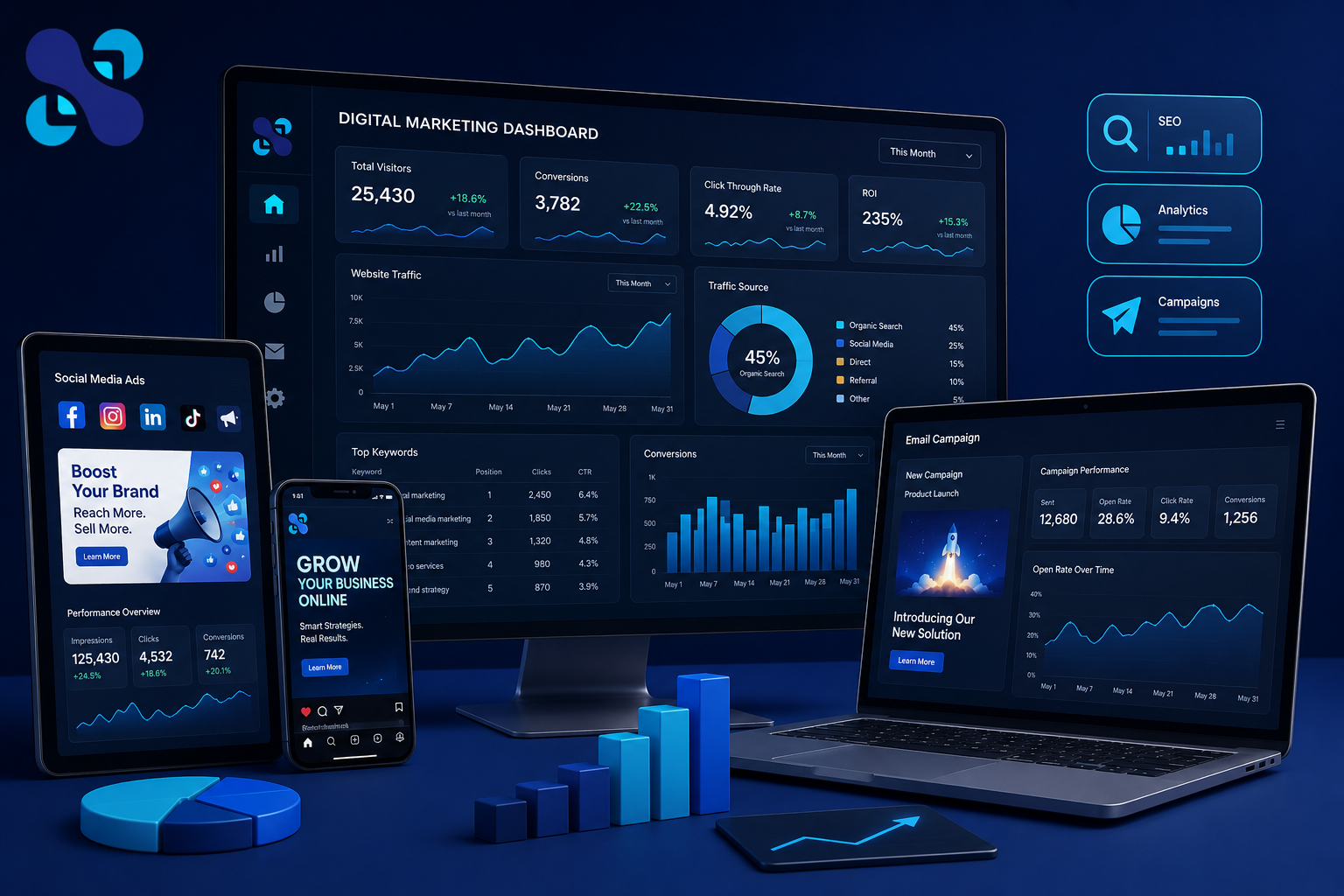
Marketing refers to the strategies and actions businesses use to promote products or services to customers. Marketing focuses on visibility, lead generation, traffic, sales, and customer acquisition.
While branding shapes perception, marketing drives attention and action. Marketing answers questions like:
- How do we reach customers?
- How do we generate sales?
- How do we promote our services?
- How do we increase awareness?
Think of marketing as the communication strategy that brings customers to your brand.
Examples of Marketing
- Social media campaigns
- SEO strategies
- Paid advertisements
- Email marketing
- Influencer marketing
- Content marketing
- Video advertising
The Main Difference Between Branding and Marketing
| Branding | Marketing |
| Creates identity | Promotes products/services |
| Builds trust | Generates traffic and leads |
| Long-term strategy | Short and medium-term campaigns |
| Focuses on perception | Focuses on visibility |
| Makes customers remember you | Makes customers notice you |
Branding shapes who you are, while marketing communicates what you offer.
Why Branding Comes Before Marketing
Many businesses invest heavily in advertising before establishing a strong brand identity. This can create inconsistent communication and reduce customer trust.
Imagine running paid ads with poor logo consistency, outdated visuals, unclear messaging, or an unprofessional website. Even if the marketing campaign reaches many people, customers may still hesitate to trust the business.
Strong branding improves marketing performance because it:
- Increases credibility,
- Improves recognition,
- Strengthens emotional connection,
- Creates consistency across platforms.
Why Businesses Need Both Branding and Marketing
Branding and marketing should work together, not compete against each other.
A business with strong branding but weak marketing may struggle to reach new customers. On the other hand, a business with aggressive marketing but poor branding may attract attention but fail to build long-term trust.
Successful businesses combine:
- Strong visual identity
- Strategic messaging
- Professional websites
- Consistent social media presence
- Effective marketing campaigns
When branding and marketing align, businesses:
- Attract better customers
- Improve customer loyalty
- Increase conversion rates
- Grow faster online
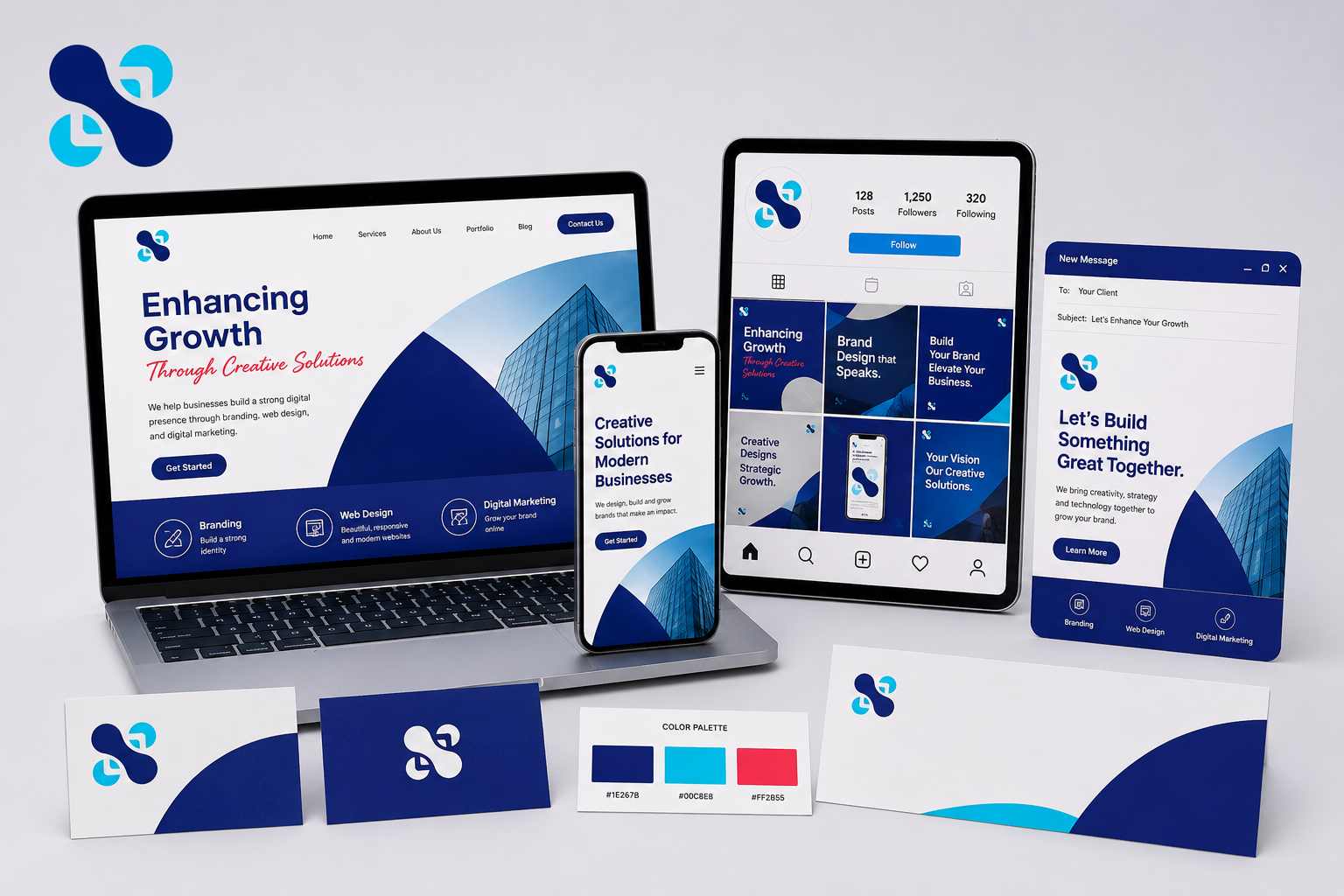
Example: A well-designed website with consistent branding instantly looks more trustworthy than a poorly designed website with random colors and inconsistent visuals.
Similarly, a professional Instagram page with cohesive branding creates a stronger impression compared to a page with inconsistent fonts, low-quality graphics, and unclear messaging. Customers naturally trust businesses that appear organised, modern, and professional.
How Businesses Can Improve Both Branding and Marketing
1. Build a Consistent Brand Identity
Use the same:
- Colors
- Typography
- Logo usage
- Messaging everywhere
The Powerful Impact of Consistency in Social Media Growth.
2. Invest in Professional Website Design
Your website is often the first impression customers have of your business.
3. Use Content Marketing Strategically
Educational content helps position businesses as trustworthy and knowledgeable.
4. Focus on Long-Term Brand Recognition
Marketing campaigns may create temporary attention, but branding builds long-term customer memory and loyalty.
Branding and marketing are both essential for business growth, but they serve different purposes. Branding defines who your business is, while marketing communicates your business to the world. One creates trust and recognition while the other creates visibility and opportunities.
Businesses that understand the difference between branding and marketing are better positioned to build stronger customer relationships, improve credibility, and grow sustainably online. In today’s competitive digital landscape, success does not come from marketing alone, it comes from combining strategic marketing with strong branding.
To get professional help and get the right services, you can email us at hello@rtsalvatore.net or call us through 0707079107.