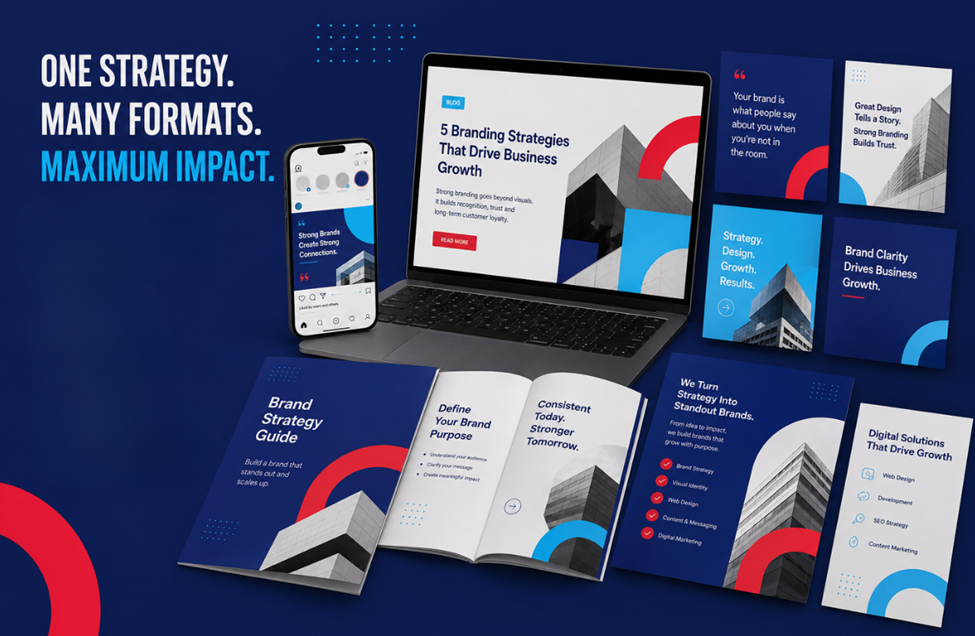
feature image

7 Brand Strategy Secrets Every Business Should Know

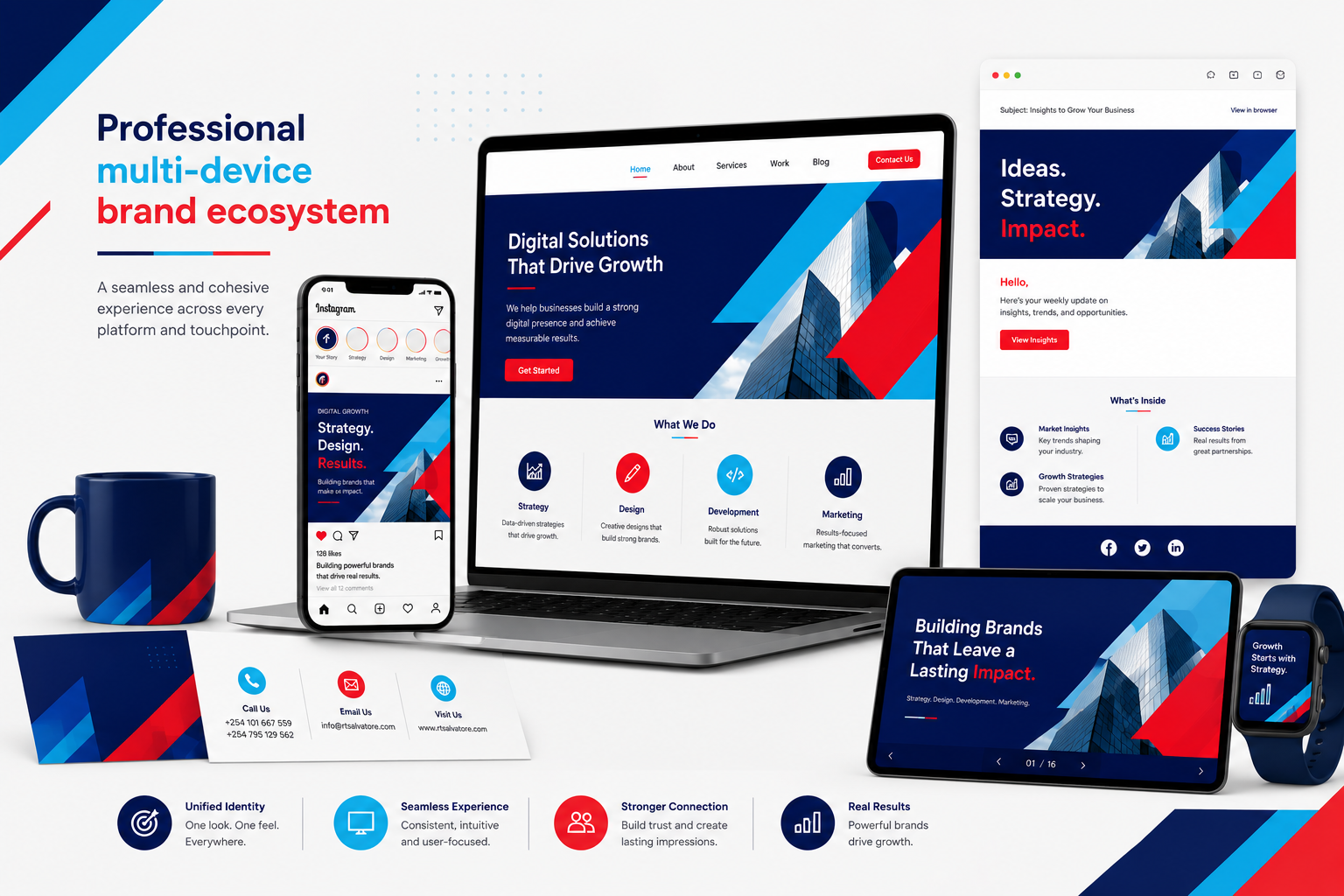
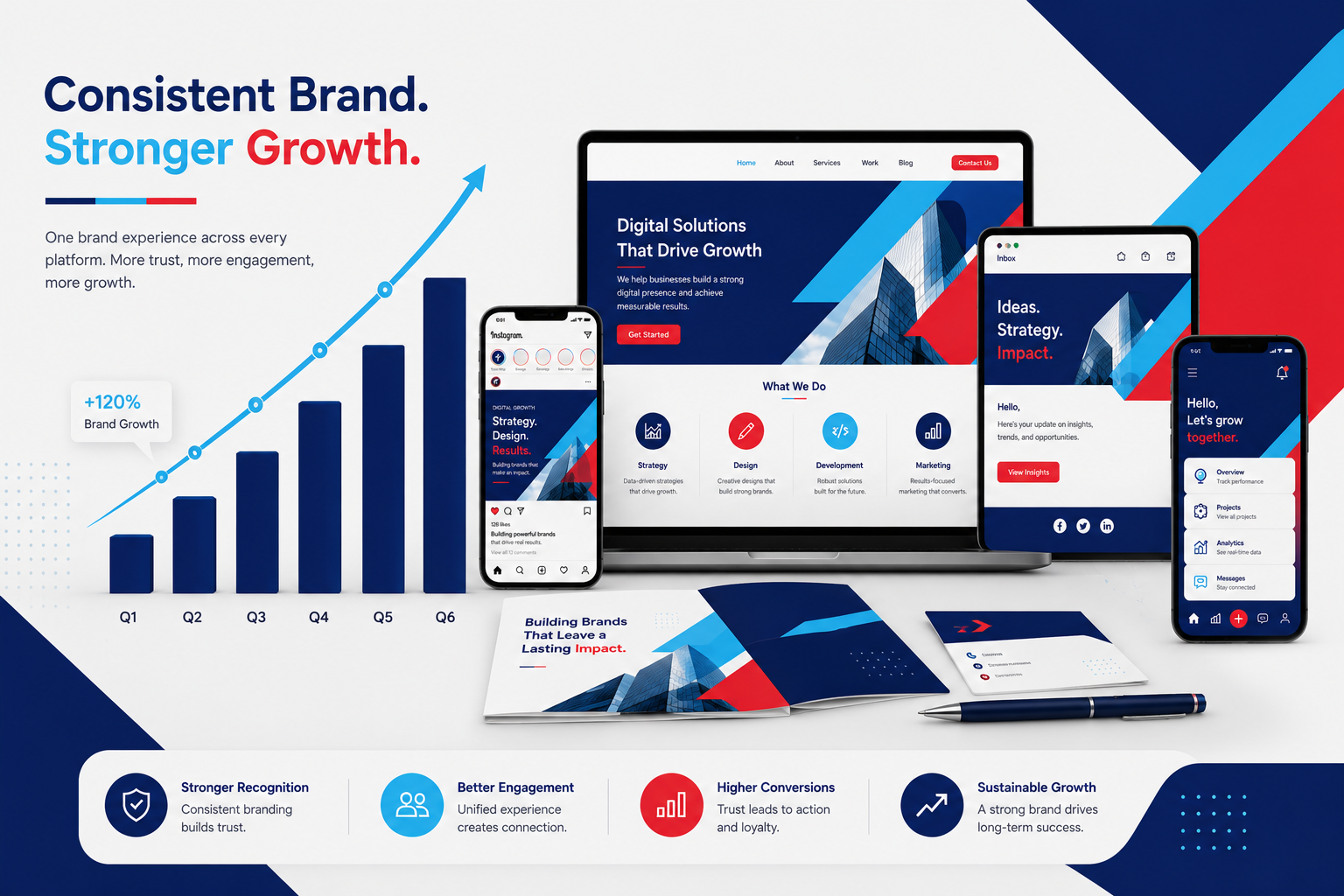
As businesses grow, their goals, audiences, and services often evolve. However, many companies continue operating without a clear brand strategy, relying on inconsistent marketing, changing visuals, or short-term campaigns to attract customers.

A strong brand strategy goes beyond having a logo or choosing brand colours. It defines how your business communicates, how customers perceive you, and what makes you different from competitors. More importantly, it provides a clear direction that supports long-term growth.

If your business is expanding, investing in a brand strategy can help you build recognition, strengthen customer trust, and create a consistent experience across every touchpoint.

1. A Brand Strategy Gives Your Business Direction

Without a clear strategy, branding decisions often become inconsistent.

A brand strategy helps define your mission, values, target audience, messaging, and visual identity. This ensures every marketing effort supports the same long-term business goals instead of feeling disconnected.
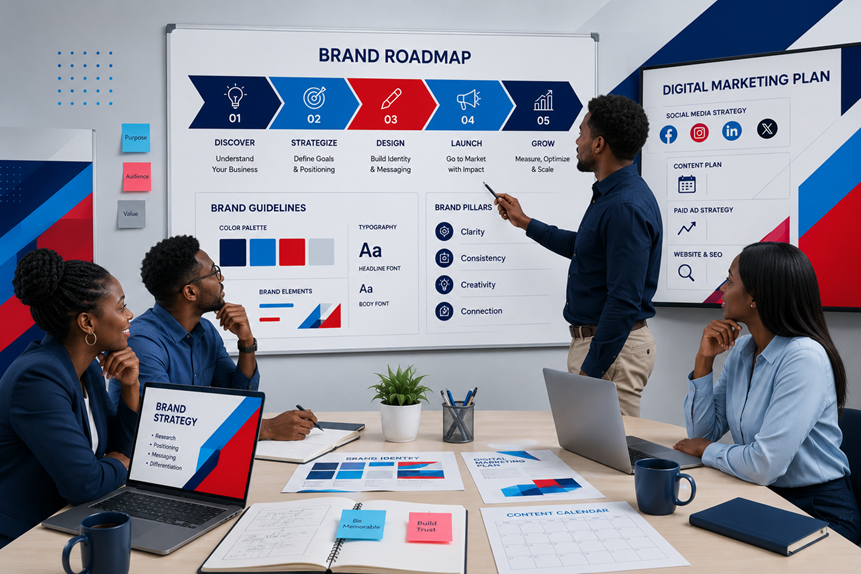
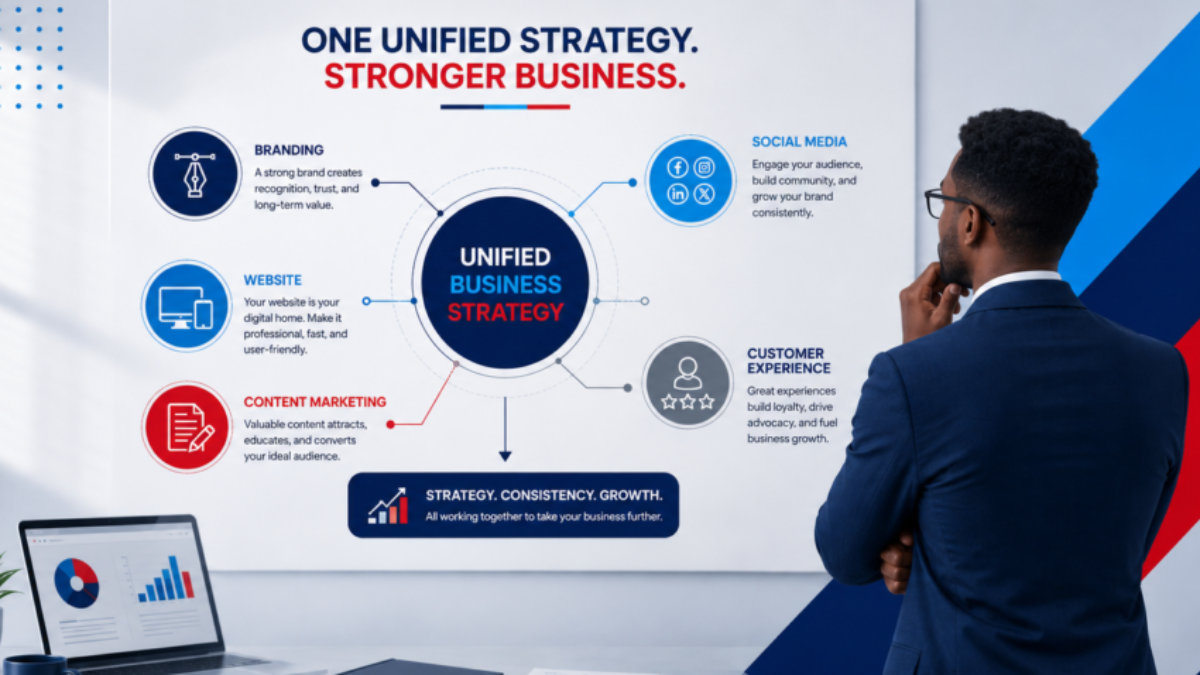
A Brand Strategy Gives Your Business Direction

2. It Helps Customers Recognise Your Business

Customers remember businesses that present themselves consistently.

When your website, social media, presentations, emails, and advertisements all follow the same visual identity and messaging, your business becomes easier to recognise.

Consistency strengthens familiarity, and familiarity builds trust.

3. A Strong Brand Builds Customer Trust

People naturally trust businesses that appear professional and reliable. A brand strategy helps ensure every customer interaction reflects:

  • Professionalism,
  • Consistency,
  • Credibility,
  • Confidence.

Whether someone visits your website or receives a proposal, the experience should reinforce the same positive impression.

4. It Differentiates You From Competitors

Many businesses offer similar products or services. Your brand strategy communicates why customers should choose you instead of someone else.

Rather than competing on price alone, a strong brand positions your business around:

  • Expertise,
  • Quality,
  • Reliability,
  • Customer experience.

This creates a stronger competitive advantage.

5. It Makes Marketing More Effective

Marketing performs better when it’s guided by a clear strategy. Instead of creating random campaigns, every piece of content supports the same message.

A strong brand strategy improves:

  • Social media consistency
  • Advertising
  • Website messaging
  • Content marketing
  • Customer communication

This creates a more effective and memorable marketing experience.

6. It Supports Long-Term Business Growth

A business may grow quickly, but without a clear brand strategy, growth can become inconsistent.

As your company expands, your brand helps maintain consistency across:

  • New services
  • Additional team members
  • Marketing campaigns
  • Customer interactions

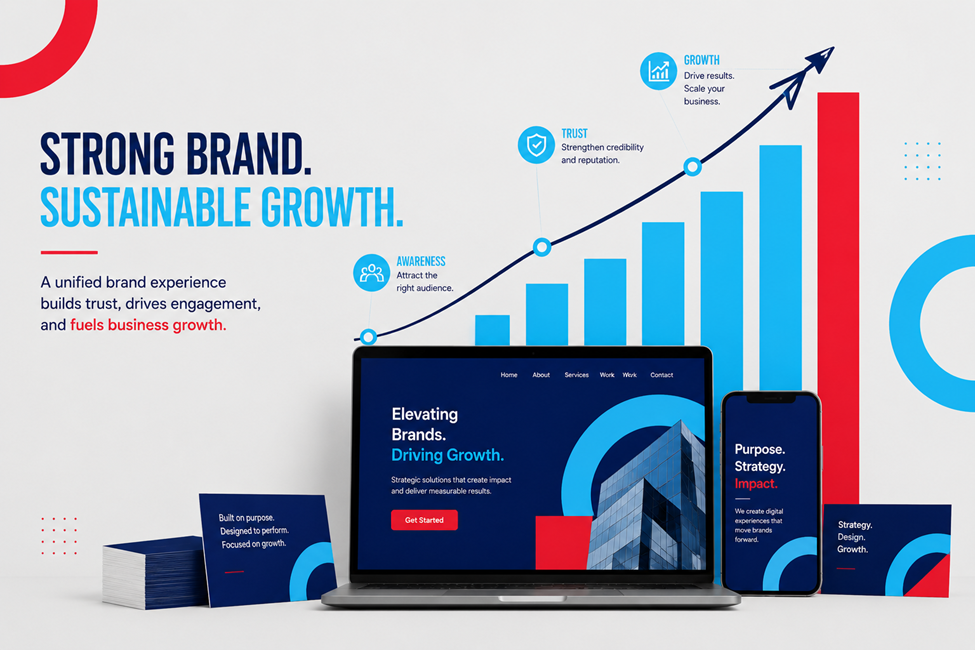
This creates a stronger foundation for sustainable growth.
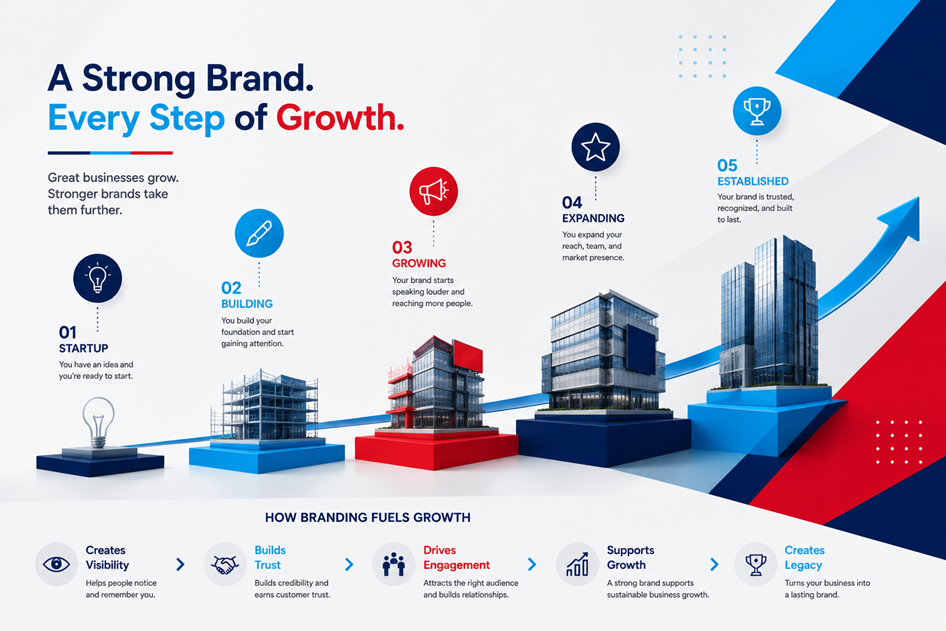
It Supports Long-Term Business Growth

7. It Creates Long-Term Brand Value

Your brand is one of your most valuable business assets.

A clear strategy builds:

  • Recognition,
  • Trust,
  • Loyalty,
  • Credibility,
  • Long-term customer relationships.

These qualities continue generating value long after individual marketing campaigns have ended.

A well-defined brand strategy provides direction, strengthens customer trust, improves marketing effectiveness, and supports sustainable growth. Instead of relying on isolated campaigns or inconsistent messaging, businesses with a clear strategy create meaningful, memorable experiences that customers recognise and value.

As your business grows, your brand should grow with it. Investing in a strong brand strategy today can help position your business for greater opportunities tomorrow.

To get professional help and get the right services, you can email us at hello@rtsalvatore.net or call us through 0707079107
1

Why Marketing Your Work is No Longer Optional

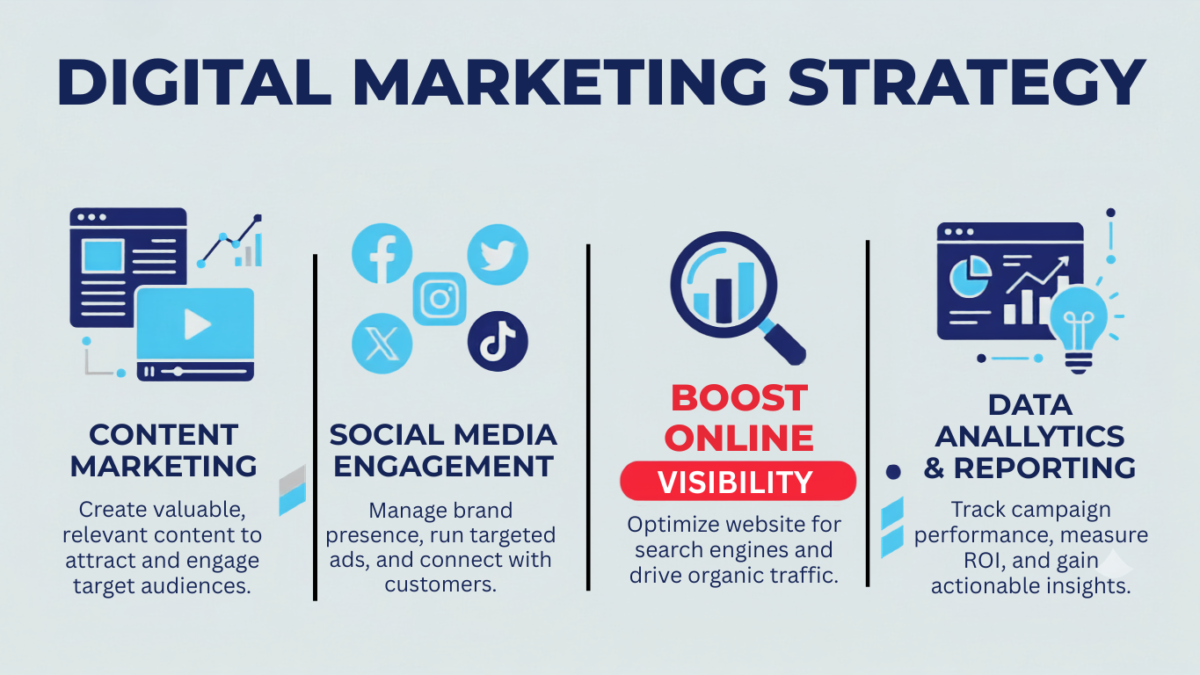
In today’s digital-first Kenyan economy, the best product doesn’t always win but the most visible one does. Whether you are running a spur in Nairobi or offering professional services to clients in Nakuru, your work deserves to be seen. However, if your target audience doesn’t know you exist, your growth stops before it even starts. In a fast-maturing business landscape, you should not rely entirely on word-of-mouth or casual referrals because they are no longer reliable. For your business to move from invisible to irreplaceable, you need to treat your marketing platforms as an ongoing, automated asset.

Why Marketing Your Work Matters

Many entrepreneurs believe that high-quality work speaks for itself. While quality builds long-term reputation, proactive marketing is what builds reach. Marketing is your bridge to your customers. When you do not actively market your business, you leave a gap. Consequently, you hand over valuable market share to competitors who might have a small product but wields an incomparably wider influence.

  • Ways to Market Your Business in Kenya

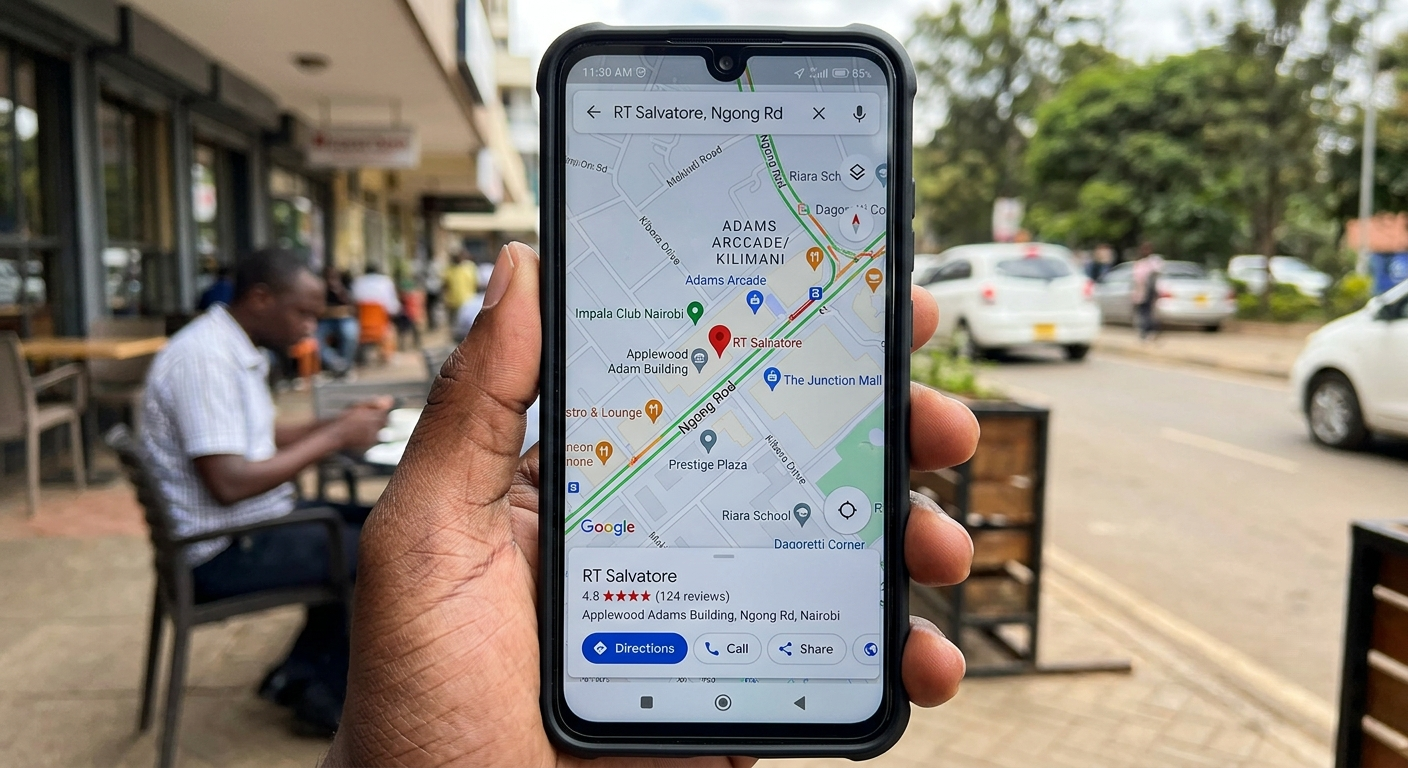
. Put Your Business on the Digital Map

When someone wants a service urgently, they don’t look for broad terms like “best businesses in Nairobi.” Instead, they search for a “spur in Thika” or “electrician near TRM.” If you haven’t claimed your spot, you are completely invisible to a customer standing just two minutes away from your door. To capture and get more clients, optimize your Google Business Profile and tailor your website content around specific local landmarks and neighbourhoods. Consequently, this ensures you rank in the local map pack where immediate buying intent lives.

marketing on the digital space

. Transition to Precision Performance Ads

For a business owner, tapping the “Boost Post” button on Facebook or Instagram is like paying someone to shout your shop’s name in a noisy and crowded room. Millions of people will hear it, but most of them will consider it as noise. On the other side, Precision Performance Ads are like having a smart assistant who watches the crowd, notices the exact number of people who listened and then goes to those people to hand them your business card. Utilizing Meta Pixels and Google Tags to track users who visited your platforms but didn’t convert is important. For instance, if a user looks at your specific service packages, retarget them on Facebook and Instagram with client testimonial videos over the next seven days to seal the deal.

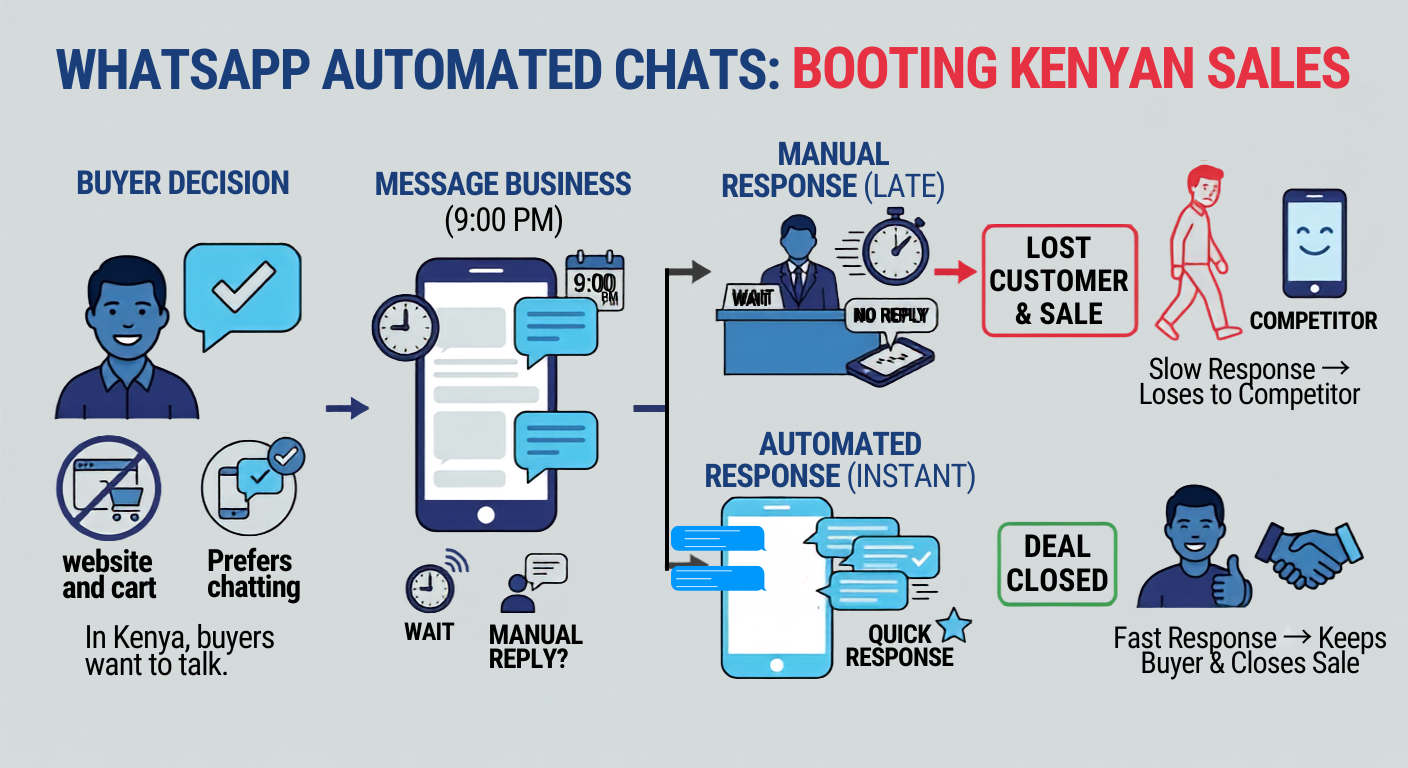
. Use Automated Chats to Close Sales on WhatsApp

Think about how Kenyans buy things online. We rarely go to a website, add items to a shopping cart, and pay for it immediately. Instead, we look for a phone number and ask “How much is it?” or where their business is located. This shows that buyers want to talk before they pay. However, if a customer texts you at 9:00 PM and you don’t reply until the next day they’ll buy the same product/service from another business. WhatsApp messages have a high open rate in Kenya compared to emails. That is why it is important for a client to get immediate response. Because most of the web traffic comes from smartphones, setting up an official WhatsApp Business automated messages is important. This allows you to deploy automated messages to your clients and build a smooth, automated conversation loop.

Succeeding in Kenya’s modern digital space no longer requires a massive budget, it requires a smart, interconnected strategy. The days of simply hoping customers stumble upon your business by chance are gone. To build a resilient brand, you must actively market your business on the digital space. It is time to stop waiting to be discovered by chance and start building the intentional digital presence that makes your business impossible to ignore.
 To get professional help and get the right services, you can email us at hello@rtsalvatore.net or call us through 0707079107.

feaature image

DIY Design: 6 Secrets Professional Brands Know

Many businesses start with DIY-Do It Yourself , (DIY design refers to business owners creating their own branding and marketing materials without hiring a professional designer or agency.) design to save money and move quickly. Free design tools and templates make it easy to create logos, social media posts, and marketing materials without hiring a professional.

However, as a business grows, DIY design can start creating limitations. Inconsistent branding, outdated visuals, and unprofessional presentation can affect customer trust and make it harder to compete with more established businesses.

If your business is growing but your design still looks like a startup project, it may be time to level up your brand.

1. Your Branding Looks Different Everywhere

One of the first signs that a business has outgrown DIY design is inconsistency.

Different fonts, colors, layouts, and visual styles across platforms can make a business appear disorganized and harder to recognize.

Your Branding Looks Different Everywhere

2. Your Marketing Materials Feel Unconnected

As businesses expand, they often create:

  • Social media content
  • Presentations
  • Proposals
  • Website pages
  • Email campaigns

Without a professional design system, these materials can begin to look unrelated.

3. You Spend Too Much Time Fixing Designs

Business owners should focus on growth, operations, and customer relationships, not constantly adjusting graphics and layouts.

Professional design systems save time by creating reusable templates and clear brand guidelines.

4. Your Competitors Look More Professional

Customers often compare businesses visually before comparing services or pricing.

A competitor with stronger branding may appear more credible even if the quality of service is similar.

5. Your Website No Longer Reflects Your Business

Recognition is built through consistency.

If customers cannot easily identify your business across different platforms, brand recall becomes weaker.

6. Customers Don’t Remember Your Brand

As businesses target larger clients, partnerships, or corporate opportunities, presentation becomes increasingly important.

Professional branding helps communicate:

  • Credibility
  • Stability
  •  Attention to detail
  •  Long-term commitment
Customers Don’t Remember Your Brand. DIY Design

DIY design is often a great starting point, but it is not always the best long-term strategy. As your business grows, your brand becomes a reflection of your professionalism, credibility, and attention to detail.

If your branding is inconsistent, your website feels outdated, or customers struggle to recognize your business, investing in professional design could be the next step toward stronger growth and better opportunities.

A professional brand doesn’t just look better, it helps your business communicate clearly, build trust faster, and compete more confidently in the market. To get professional help and get the right services, you can email us at hello@rtsalvatore.net or call us through 0707079107.

feature image

7 Reasons why Content Marketing Is Worth the Investment

Content marketing is more than just publishing blog posts or sharing updates on social media. It’s a long-term investment that helps businesses build authority, improve search engine visibility, educate customers, and generate sustainable growth.

Unlike traditional advertising, which stops delivering results once the budget runs out, quality content continues to attract, inform, and convert potential customers long after it’s published.

If your goal is to build a trusted brand and create lasting relationships with your audience, content marketing should be a key part of your business strategy.

1. Content Marketing Improves Your SEO

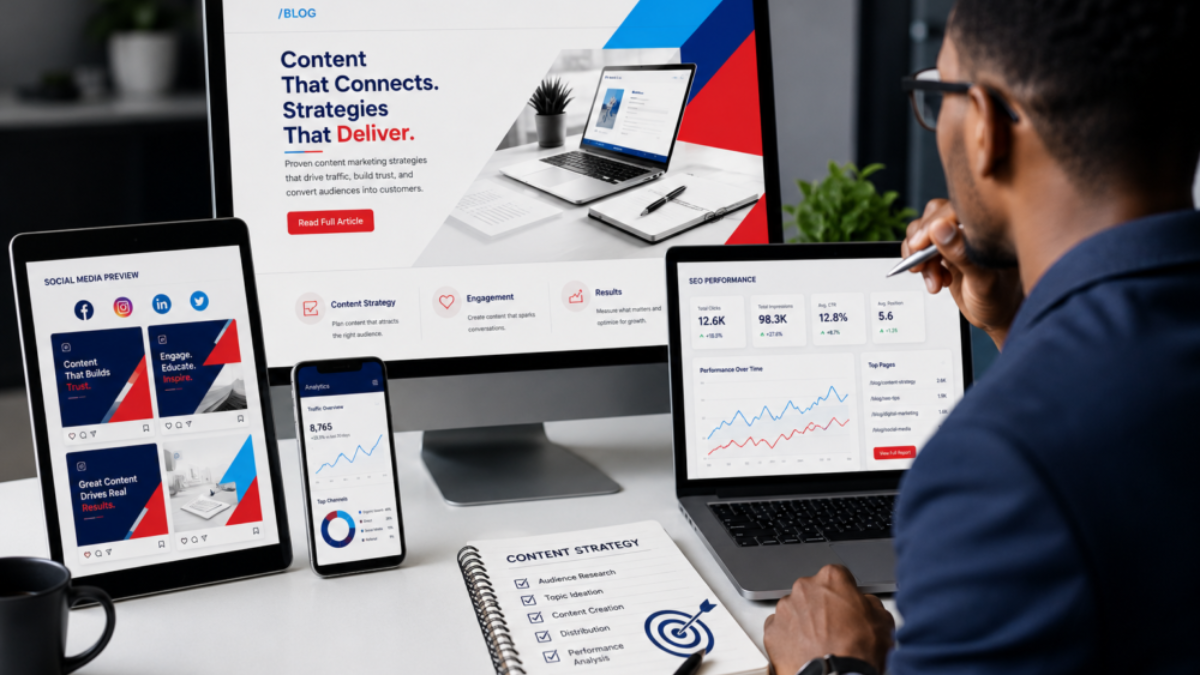
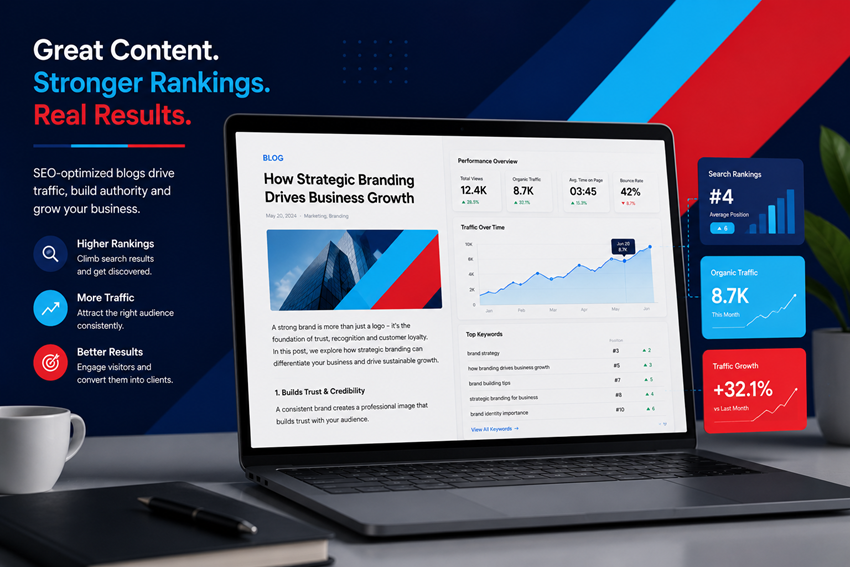
Every blog you publish gives your website another opportunity to appear in search engine results. By creating valuable, keyword-focused content, your business can attract people actively searching for answers, products, or services related to your industry.

The more high-quality content you publish, the more opportunities you have to increase organic traffic and reach potential customers.

Content Marketing Improves Your SEO

2. Blogs Position Your Business as an Industry Expert

Customers are more likely to trust businesses that consistently share useful knowledge. Educational blog articles demonstrate your expertise while helping potential clients solve problems before they even contact you. Over time, your blog becomes a valuable resource that builds credibility and encourages repeat visits.

3. Content Educates Potential Customers

Not every visitor is ready to buy immediately. Many people first need information that helps them understand: their problem, possible solutions, and why your business is the right choice. Educational content builds confidence and reduces uncertainty throughout the customer journey.

4. Great Content Builds Authority

Businesses that consistently publish valuable content become recognized as trusted voices within their industries.

Authority doesn’t happen overnight, it develops through consistently providing accurate, relevant, and helpful information.

Customers naturally gravitate toward businesses they perceive as knowledgeable and reliable.

Great Content Builds Authority

5. Content Supports Every Marketing Channel

One well-written blog can be repurposed into:

  • Social media posts
  • Carousel graphics
  • Reels
  • Newsletters
  • Website updates
  • Email campaigns

This allows businesses to maximize the value of every piece of content they create.

6. Content Marketing Generates Long-Term Results

Unlike paid advertisements that stop producing results when the campaign ends, quality content continues attracting visitors for months or even years.

A single blog article can: rank in search engines, answer customer questions, generate website traffic, and produce leads long after publication.

This makes content marketing one of the most sustainable digital marketing strategies available.

7. Content Builds Lasting Customer Relationships

Businesses that consistently provide helpful content remain visible and valuable to their audience. Whether customers are ready to buy today or six months from now, your content keeps your business top of mind.

This ongoing relationship strengthens trust and increases the likelihood of future enquiries and referrals.

Content Builds Lasting Customer Relationships

Content marketing is not an expense, it’s a long-term investment in your business’s visibility, authority, and growth.

By creating valuable blogs, improving your SEO, educating your audience, and consistently sharing useful insights, your business can attract qualified leads and build stronger customer relationships over time.

In an increasingly competitive digital landscape, businesses that invest in content today are better positioned to succeed tomorrow. To get professional help and get the right services, you can email us at hello@rtsalvatore.net or call us through 0707079107.

feature image

7 Ways Professional Design Influences Buying Decisions

Professional design plays a much bigger role in business success than many people realise. Before customers read your services, compare prices, or contact your team, they have already formed an opinion based on what they see. From your website and branding to your social media presence and marketing materials, every visual element influences how people perceive your business.

Professional design doesn’t just make a business look attractive; it builds credibility, creates trust, and guides customers toward making confident buying decisions. Understanding how design shapes customer behaviour can help businesses create stronger first impressions and achieve long-term growth.

1. First Impressions Influence Customer Decisions

Research shows that people form opinions within seconds of encountering a business online. A modern website, consistent branding, and professional visuals immediately communicate credibility.

On the other hand, outdated or poorly designed materials can discourage potential customers before they explore your products or services.

First Impressions Influence Customer Decisions

2. Professional Design Builds Trust

Customers are naturally drawn to businesses that appear reliable.

Professional design communicates:

  • Attention to detail
  • Competence
  • Credibility
  • Quality

When customers trust your business, they’re far more likely to make a purchase.

3. Strong Branding Makes Businesses Memorable

Professional design goes beyond logos.

It creates consistency across:

  • Websites
  • Social media
  • Presentations
  • Advertisements
  • Email templates

Consistency helps customers remember your brand long after their first interaction.

Strong Branding in Professional Design Makes Businesses Memorable

 4. Good Design Makes Information Easier to Understand

Customers appreciate clarity. Professional layouts, readable typography, and logical navigation help users find information quickly.

The easier it is to understand your business, the more confident customers feel about buying from you.

 5. Visual Appeal Creates Emotional Connections

People often make purchasing decisions emotionally before justifying them logically.

Professional design can communicate:

  • Confidence
  • Innovation
  • Reliability
  • Sophistication

These emotional cues influence how customers perceive value.

 6. Professional Design Supports Premium Pricing

Businesses with polished branding often appear more valuable. Customers associate professional presentation with higher-quality products and services, making them more willing to invest.

Professional design helps businesses compete on value instead of price.

7. Great Design Improves the Customer Experience

Every interaction matters. From your homepage to your contact form, design should guide customers effortlessly through their journey.

A positive experience increases engagement, builds trust, and improves conversions.

Great Design Improves the Customer Experience

Professional design is far more than decoration; it is a strategic business tool. It shapes first impressions, builds trust, improves user experience, strengthens brand recognition, and influences purchasing decisions.

Businesses that invest in professional design are better positioned to attract customers, communicate value, and compete in today’s digital marketplace. By creating a cohesive and memorable brand experience, companies can build stronger relationships with their audience and encourage long-term growth.

To get professional help and get the right services, you can email us at hello@rtsalvatore.net or call us through 0707079107
feature image

How to Make Your Business Stand Out as an Industry Leader

Customers naturally gravitate toward businesses they perceive as experts. Whether you’re a startup or an established company, positioning your business as an industry leader can help you attract better opportunities, build trust, and stand out from competitors.

Industry leadership isn’t reserved for the biggest companies. It comes from consistently demonstrating expertise, delivering value, and creating a professional brand experience that customers remember.

Here are several practical ways to position your business as an industry leader.

1. Build a Strong and Consistent Brand

Your brand is often the first impression customers have of your business. Consistent branding through your visuals, messaging, and customer interactions communicates professionalism and reliability.

Businesses that appear polished and intentional are more likely to be perceived as leaders.

2. Share Valuable Knowledge

Industry leaders educate their audience. Publish, blogs, guides, case studies, social media insights, and helpful resources.

Providing value positions your business as a trusted source of expertise rather than just another service provider.

3. Invest in a Professional Online Presence

A modern website and polished digital presence strengthen credibility.

Your website should be: fast, mobile-friendly, easy to navigate, and aligned with your brand identity.

Customers often judge your expertise based on your online presentation.

Invest in a Professional Online Presence

4. Be Consistent in Your Communication

Leaders communicate clearly and consistently.

Ensure your tone of voice, messaging, visuals, and values remain aligned across all platforms.

Consistency builds familiarity, and familiarity builds trust.

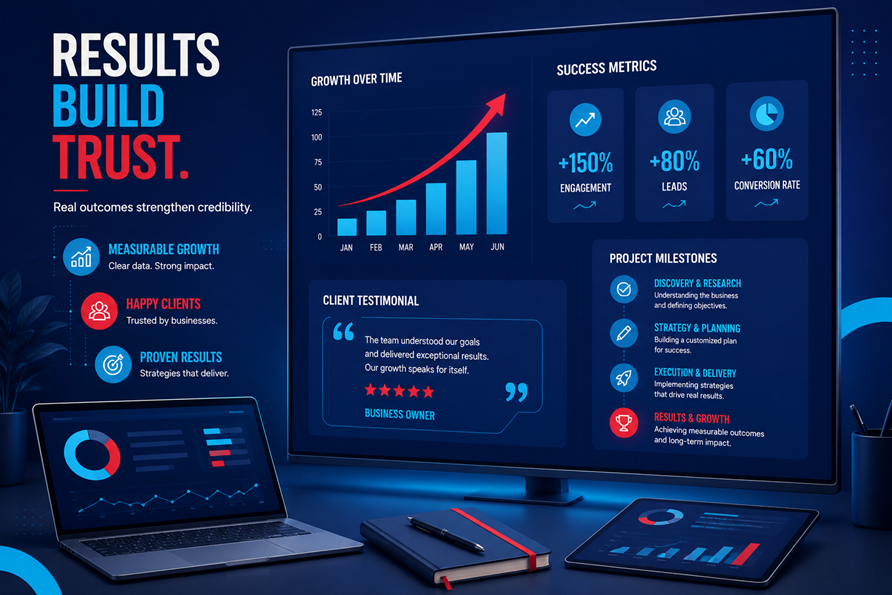
5. Showcase Results and Success Stories

People trust proof.

Share client testimonials, project outcomes, before-and-after transformations,and case studies.

Demonstrating real results reinforces your authority.

Showcase Results and Success Stories in Industry leader

6. Focus on Relationships, Not Just Sales

Industry leaders build communities. Listen to customer feedback, engage with your audience, and prioritize long-term relationships over quick wins.

Businesses that genuinely care about their customers earn loyalty and referrals.

7. Keep Evolving

Markets change, technologies evolve, and customer expectations shift. The businesses that remain industry leaders are those that continue learning, adapting, and improving.

Innovation and continuous improvement help maintain relevance and authority.

Positioning your business as an industry leader doesn’t happen overnight. It requires consistency, expertise, professionalism, and a commitment to delivering value. Businesses that invest in these areas are more likely to earn trust, attract high-quality customers, and create a lasting competitive advantage.

Leadership isn’t about being the loudest voice in the room. It’s about becoming the business people naturally trust and remember.

To get professional help and get the right services, you can email us at hello@rtsalvatore.net or call us through 0707079107.

feature image

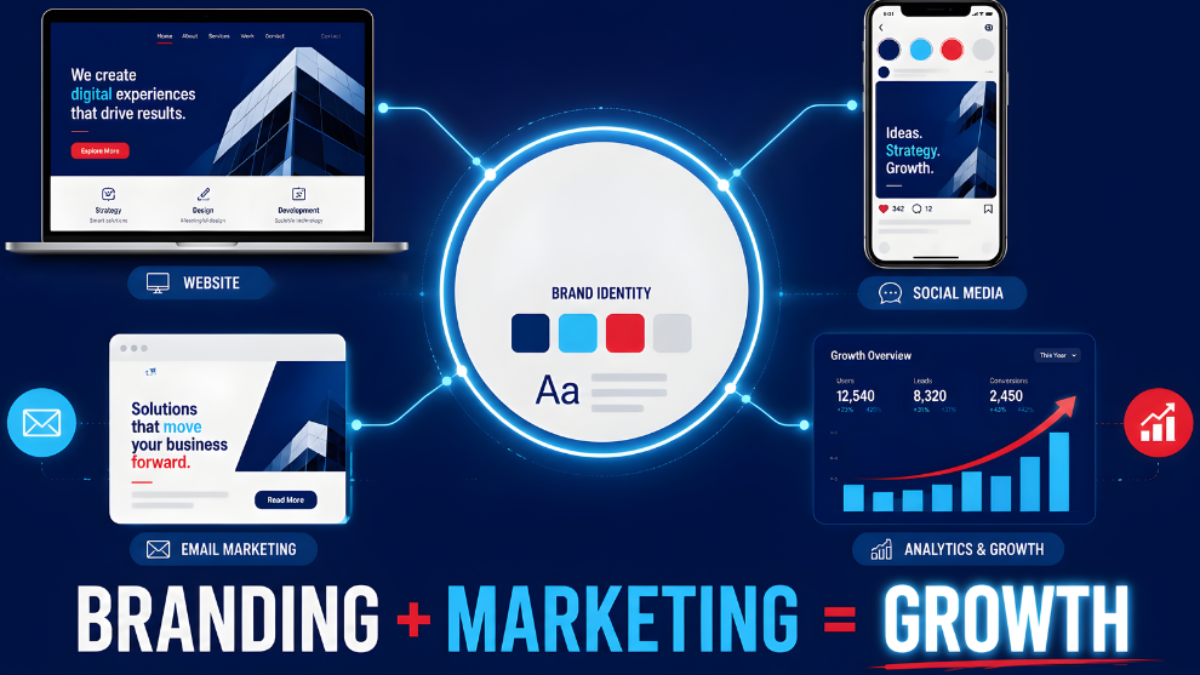
Why Branding and Digital Marketing Work Better Together

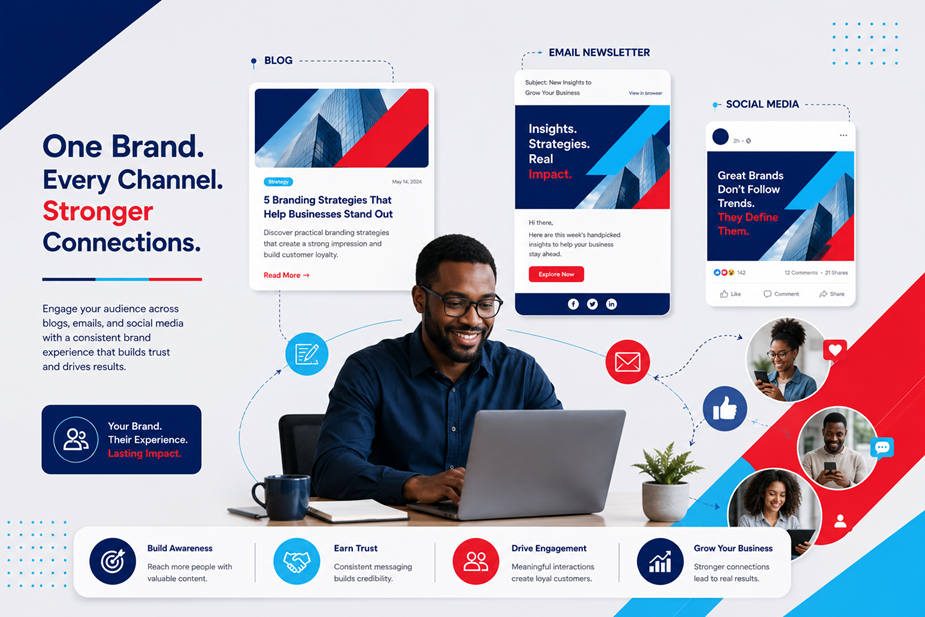
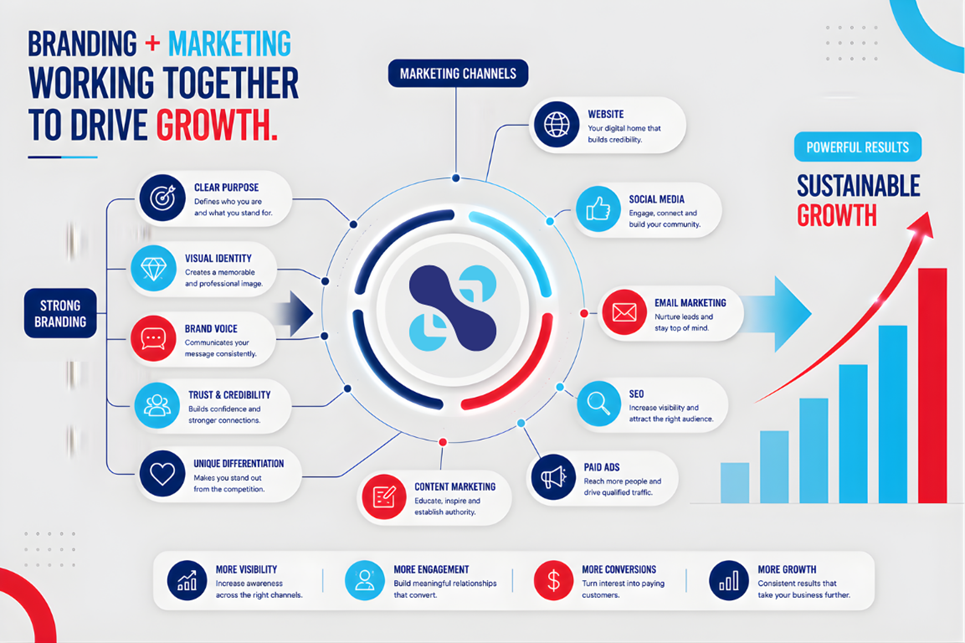
Many businesses treat branding and digital marketing as separate strategies. In reality, they work best when combined. While branding shapes how people perceive your business, digital marketing helps deliver that message to the right audience.

Without strong branding, marketing campaigns can struggle to build trust and recognition. Without effective marketing, even the strongest brand may go unnoticed. Together, branding and digital marketing create a powerful foundation for business growth.

What Is Branding?

Branding is the identity of your business. It includes:

  • Logo design
  • Brand colors
  • Typography
  • Messaging
  • Tone of voice
  • Customer perception

Branding is not simply about how a business looks. It is about how customers remember and experience your company. Strong branding helps businesses:

  • Build recognition
  • Create trust
  • Stand out from competitors
  • Develop customer loyalty
What Is Branding

What Is Digital Marketing?

Digital marketing is the process of promoting your business online. It includes:

  • Social media marketing
  • Search engine optimization (SEO)
  • Content marketing
  • Email marketing
  • Google Ads
  • Online advertising

The goal of digital marketing is to attract, engage, and convert potential customers. While branding creates the message, digital marketing helps distribute it. 

What Is Digital Marketing

How Branding Supports Digital Marketing

1. Branding Creates Recognition

People are more likely to engage with businesses they recognize. Consistent branding across websites, social media, advertisements, and email campaigns helps customers remember your business.

The more familiar your brand becomes, the easier it is for marketing campaigns to generate results.

2. Branding Builds Trust

Trust is essential in digital marketing.

Before making a purchase or submitting an inquiry, customers often evaluate whether a business appears credible.

Professional branding signals:

  • reliability
  • professionalism
  • expertise

Strong branding makes marketing messages more believable and effective.

3. Branding Improves Advertising Performance

Advertising can drive traffic, but branding influences how people respond.

A well-branded advertisement is often:

  • more memorable
  • more trustworthy
  • more engaging

Businesses with strong branding often see better performance from their marketing campaigns because customers already have confidence in the brand.

How Digital Marketing Supports Branding

1. Digital Marketing Increases Brand Visibility

A great brand is only valuable if people see it.

Digital marketing helps businesses: reach new audiences, increase awareness, and expand visibility.

Every social media post, blog article, and advertisement creates another opportunity for customers to discover your brand.

2. Content Marketing Strengthens Brand Authority

Educational content helps businesses demonstrate expertise.

Blogs, videos, guides, and social media content allow businesses to position themselves as trusted industry leaders.

The more value a business provides, the stronger its brand becomes.

3. Marketing Reinforces Brand Consistency

Digital marketing provides repeated exposure to your brand.

When customers repeatedly encounter the same: visual identity, messaging, and tone of voice, they begin to associate those elements with your business. Consistency strengthens brand recognition over time.

Why Businesses Need Both Branding and Digital Marketing

Branding and digital marketing are most effective when they work together.

Branding answers:

“Who are we?”

Digital marketing answers:

“How do we reach the right audience?”

Without branding, marketing lacks direction.

Without marketing, branding lacks visibility.

Businesses that invest in both create stronger customer experiences, build trust faster, and generate better long-term results.

Why Businesses Need Both Branding and Digital Marketing

Branding and digital marketing should not be viewed as separate investments. Branding creates recognition, trust, and identity. Digital marketing amplifies that identity and connects it with potential customers.

When combined, they help businesses attract attention, build credibility, and achieve sustainable growth. The most successful businesses understand that branding and marketing are not competing strategies, they are partners in growth.

To get professional help and get the right services, you can email us at hello@rtsalvatore.net or call us through 0707079107.

feature image

How Strong Branding Helps You Charge More

Strong branding does more than make a business look professional, it influences how customers perceive value. In today’s competitive marketplace, businesses with strong branding often find it easier to charge premium prices because customers associate their brand with quality, trust, and credibility.

Many customers are willing to pay more for products or services from brands they recognise and trust. This is why two businesses offering similar solutions can charge vastly different prices. The difference often lies in the strength of their branding.

1. Strong Branding Increases Perceived Value

Customers don’t simply buy products or services, they buy confidence in the outcome.

A strong brand creates a perception of:

  • Quality
  • Expertise
  • Reliability
  • Professionalism

When a business presents itself professionally through consistent branding, customers often perceive its offerings as more valuable.

As a result, pricing becomes less about cost and more about perceived value.

Strong Branding Increases Perceived Value

2. Branding Builds Trust Before the Sale

Trust plays a significant role in purchasing decisions.

Before customers contact your business, they often evaluate:

  • Your website
  • Social media presence
  • Marketing materials
  • Brand identity

Strong branding creates a professional and consistent experience that reassures potential customers they are dealing with a credible business.

When trust increases, customers become less focused on finding the cheapest option and more focused on choosing the right one.

3. Premium Brands Compete on Value, Not Price

Businesses with weak branding often compete primarily on price.

This creates challenges because:

  • Lower prices reduce profit margins
  • Competitors can easily undercut pricing
  • Customers become price-sensitive

Strong brands position themselves differently.

Instead of competing on affordability, they compete on:

  • Expertise
  • Results
  • Customer experience
  • Reputation

This allows them to justify higher prices while attracting customers who prioritise quality.

Premium Brands Compete on Value, Not Price

4. Consistency Reinforces Professionalism

Customers expect consistency from businesses they trust.

Strong brands maintain consistent:

  • Visual identity
  • Messaging
  • Tone of voice
  • Customer experience

Whether a customer visits your website, sees your social media content, or receives an email, the experience should feel connected.

Consistency communicates professionalism, which supports premium pricing.

5. Strong Branding Attracts Higher-Quality Clients

Premium branding doesn’t just help businesses charge more, it helps attract better clients.

Businesses with strong branding often appeal to customers who:

  • Value quality
  • Seek expertise
  • Prioritize reliability
  • Are willing to invest in better solutions

These customers are typically less price-sensitive and more interested in long-term value. As a result, strong branding can improve both revenue and client quality.

6. Branding Creates Long-Term Competitive Advantage

Competitors can copy products, services, and pricing strategies. What they cannot easily replicate is a strong brand.

Over time, strong branding contributes to:

  • Customer loyalty
  • Brand recognition
  • Market authority
  • Higher perceived value

These advantages make it easier for businesses to maintain premium pricing while strengthening their market position.

Branding Creates Long-Term Competitive Advantage

How Businesses Can Strengthen Their Brand

To position your business for premium pricing:

Develop a Consistent Brand Identity

Use consistent colours, typography, messaging, and visual assets.

Invest in Professional Website Design

Your website should reflect the quality of your business.

Create High-Quality Content

Publish content that demonstrates expertise and builds trust.

Focus on Customer Experience

Every interaction should reinforce professionalism and value.

Maintain Brand Consistency

Consistency helps customers recognise and trust your business.

Strong branding is one of the most powerful tools a business can use to increase perceived value and justify premium pricing.

When customers trust your brand, recognise your expertise, and associate your business with quality, price becomes less of a deciding factor. Instead of competing on cost alone, businesses with strong branding compete on value, credibility, and customer experience.

In today’s digital marketplace, investing in branding is not simply about looking good, it is about creating a business that customers trust, remember, and are willing to pay more for.

To get professional help and get the right services, you can email us at hello@rtsalvatore.net or call us through 0707079107.

feature image

Inconsistent Branding: The Silent Business Growth Killer

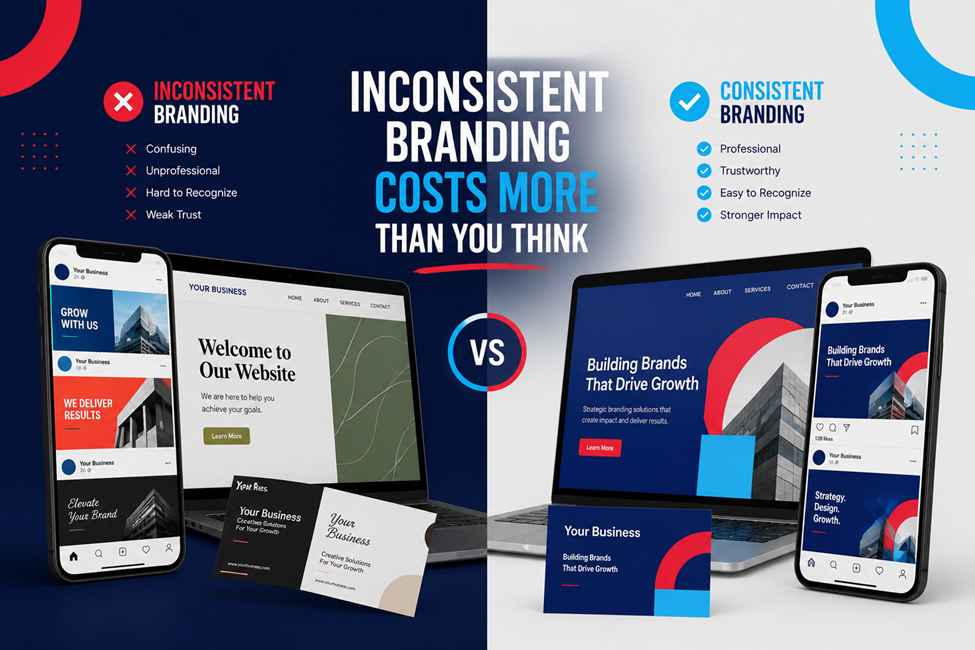
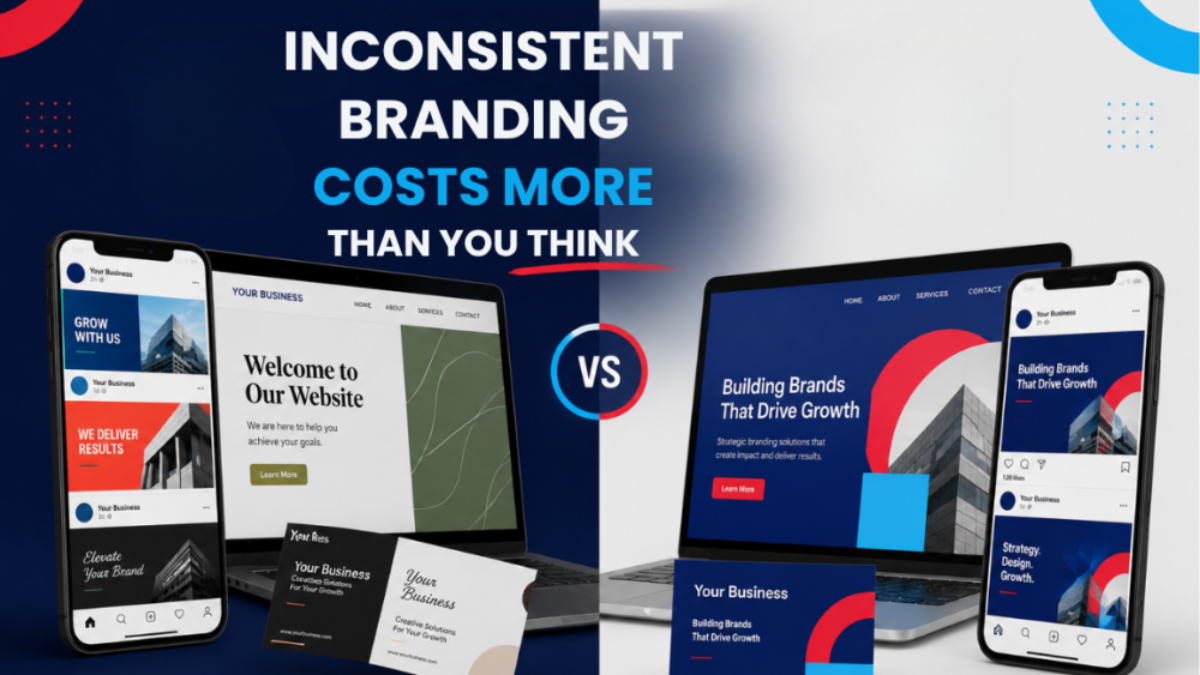
Inconsistent branding is a challenge many businesses underestimate. Companies invest in logos, websites, social media content, and marketing campaigns but often overlook one crucial factor: maintaining a consistent brand identity across every customer touchpoint.

At first glance, inconsistent branding may seem harmless. However, over time, it can affect customer recognition, create confusion, weaken trust, and limit business growth.

The hidden cost of inconsistent branding isn’t always immediately visible, but its long-term effects can significantly influence how customers perceive and engage with your business.


1. Inconsistent Branding Reduces Brand Recognition

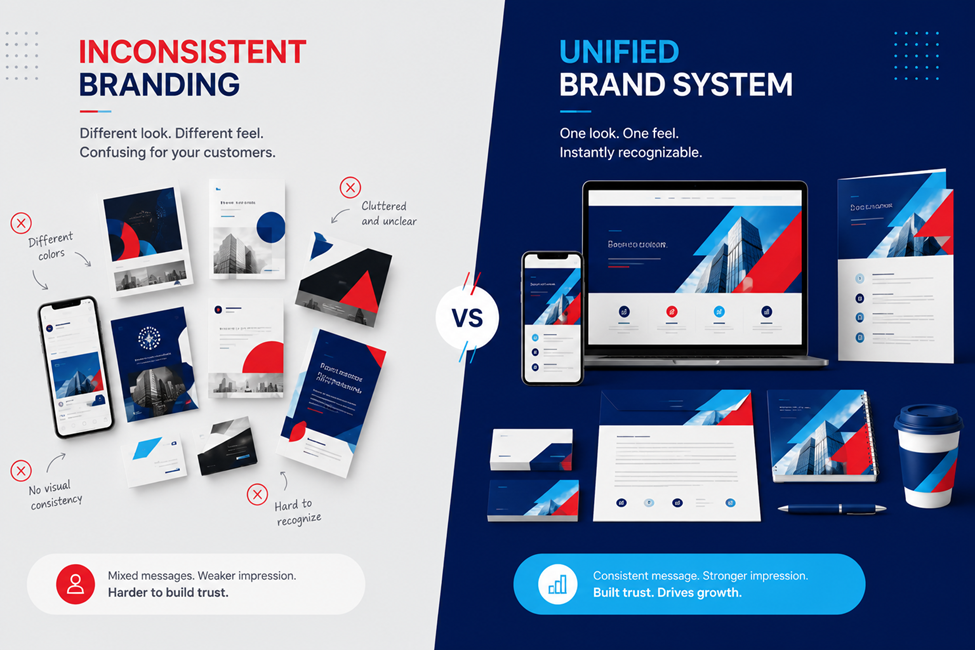
One of the primary goals of branding is to make your business memorable.

When customers repeatedly see the same colours, typography, messaging, and visual identity, they begin to recognise and remember your brand more easily.

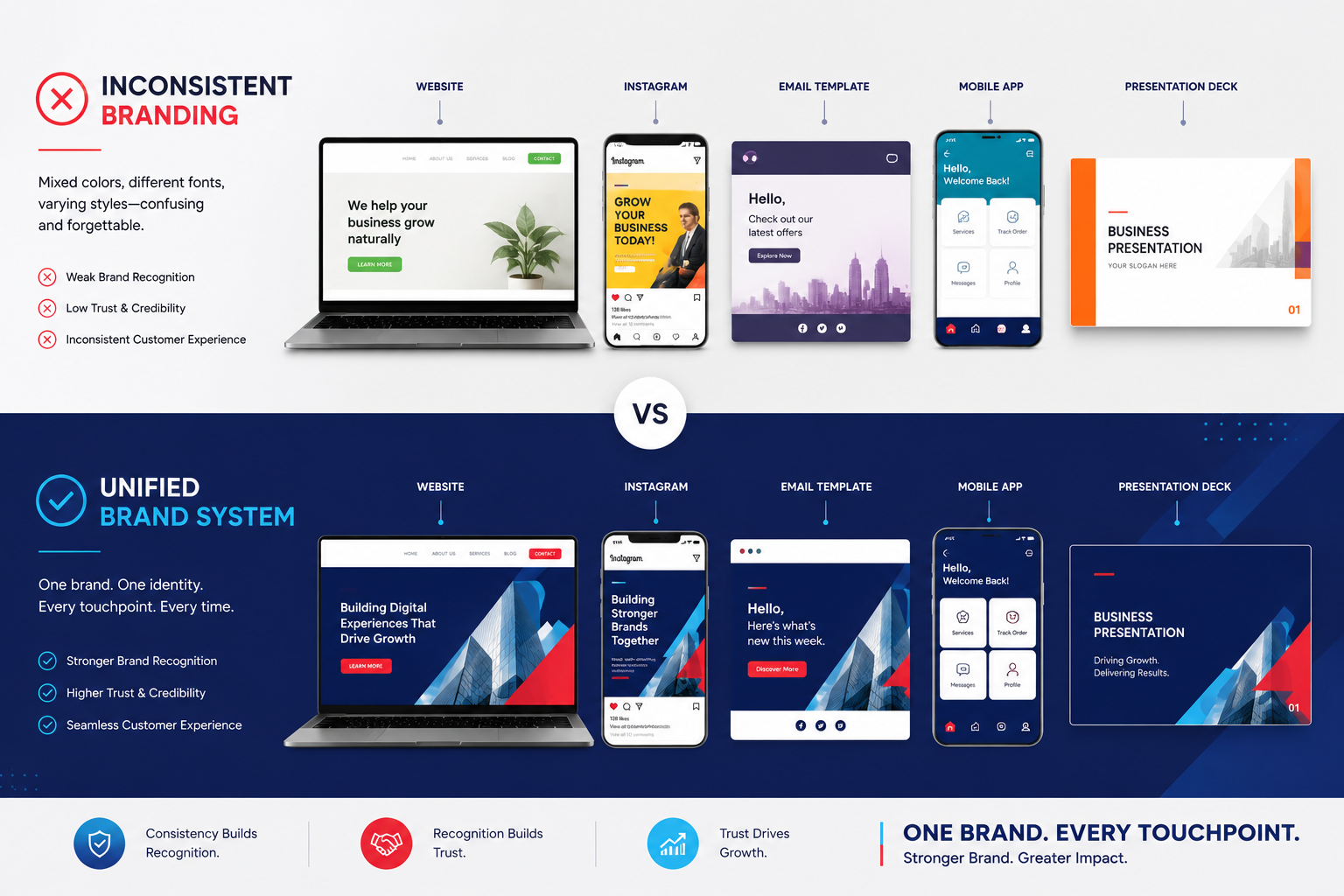
However, when a business uses different styles across platforms, recognition becomes much harder.

Examples include:

  • Different logo variations across channels
  • Inconsistent color schemes
  • Changing typography frequently
  • Different messaging styles

The more inconsistent your branding becomes, the harder it is for customers to identify your business.

Inconsistent Branding Reduces Brand Recognition


2. Customer Confusion Can Hurt Business Growth

Customers should instantly understand who you are and what your business represents.

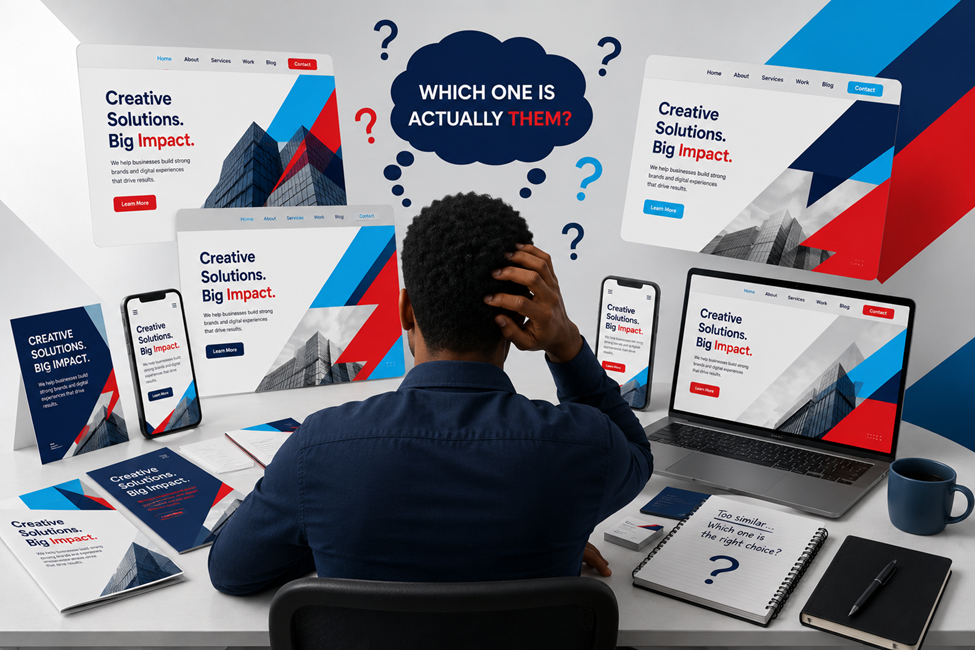
When branding varies significantly across websites, social media platforms, email campaigns, and advertisements, customers may struggle to connect these experiences to the same company.

Confused customers are less likely to engage, enquire, or make purchasing decisions. Inconsistency creates unnecessary friction in the customer journey.


3. Trust Is Built Through Consistency

Trust is one of the most valuable assets a business can develop. Customers often associate consistency with professionalism, reliability, and competence.

Imagine visiting a company’s website and seeing one visual style, then visiting their social media profiles and encountering completely different branding.

This inconsistency can raise questions:

  • Is this the same company?
  • Is the business still active?
  • How professional are they?

While customers may not consciously identify branding inconsistencies, they often notice when something feels disconnected.

Trust Is Built Through Consistency


4. Marketing Becomes Less Effective

Marketing efforts become significantly stronger when supported by a recognisable brand.

Every advertisement, social media post, email campaign, and website visit should reinforce the same identity.

Without consistency:

  • Campaigns become less memorable
  • Brand recall decreases
  • Customer trust weakens
  • Marketing investments deliver lower returns

Businesses often spend more on advertising while unknowingly reducing its effectiveness through inconsistent branding.

5. Inconsistent Branding Makes It Harder to Look Premium

Premium brands rarely leave their identity to chance. Whether customers interact with a website, a presentation, social media content, or an email, the experience feels connected and intentional.

Consistency communicates:

  • Professionalism
  • Attention to detail
  • Credibility
  • Authority

Businesses that lack consistency often struggle to create the same premium perception.

6. Long-Term Growth Depends on Strong Brand Equity

Brand equity refers to the value people associate with your business over time. Every consistent interaction strengthens that value. Every inconsistent interaction weakens it.

As businesses grow, consistency becomes even more important because customers interact with brands across more channels than ever before.

A strong and recognisable brand becomes a competitive advantage that supports:

  • Customer loyalty
  • Referrals
  • Recognition
  • Long-term growth
  • List
Long-Term Growth Depends on Strong Brand Equity

How Businesses Can Improve Branding Consistency

To create a stronger and more recognisable brand:

1.     Establish Brand Guidelines

Define:

  • Colours
  • Typography
  • Logo usage
  • Visual style
  • Messaging standards

2.     Maintain Consistency Across Platforms

Ensure every customer touchpoint reflects the same identity.

3.     Regularly Audit Brand Assets

Review websites, social media profiles, presentations, and marketing materials for consistency.

4.     Invest in Strategic Branding

Treat branding as a business asset rather than a design exercise.

The cost of inconsistent branding extends far beyond visual appearance. It can reduce recognition, confuse customers, weaken trust, lower marketing effectiveness, and limit long-term growth.

Businesses that invest in consistency create stronger customer experiences, build lasting credibility, and position themselves for sustainable success.

In a competitive digital environment, consistency is not simply a branding preference, it is a business advantage.

To get professional help and get the right services, you can email us at hello@rtsalvatore.net or call us through 0707079107
feature image

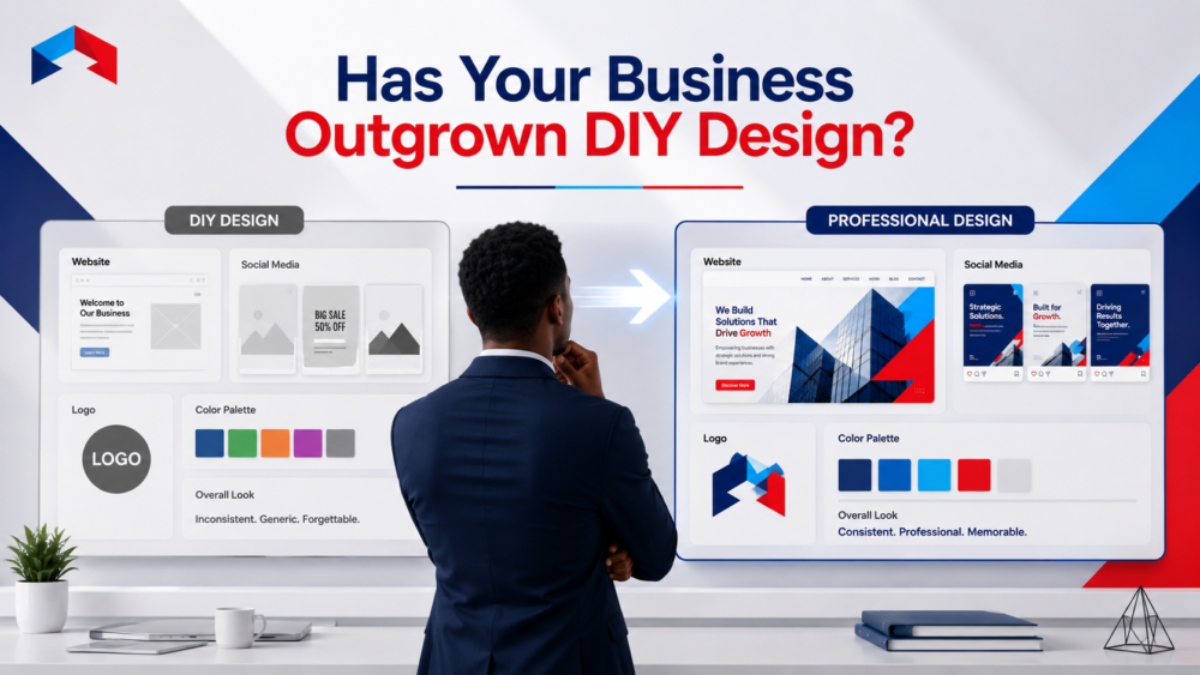
How to Make Your Business Look More Premium and Professional Online

In today’s digital world, customers often form opinions about a business before making contact. Within seconds of visiting a website, viewing social media profiles, or seeing marketing materials, people begin judging credibility, professionalism, and whether a company presents itself as a premium business.

The question is: what makes one business appear premium while another looks average?

The answer goes beyond having a logo or a website. Premium brands create a consistent, professional experience across every customer touchpoint, helping them build trust, recognition, and a stronger market presence.

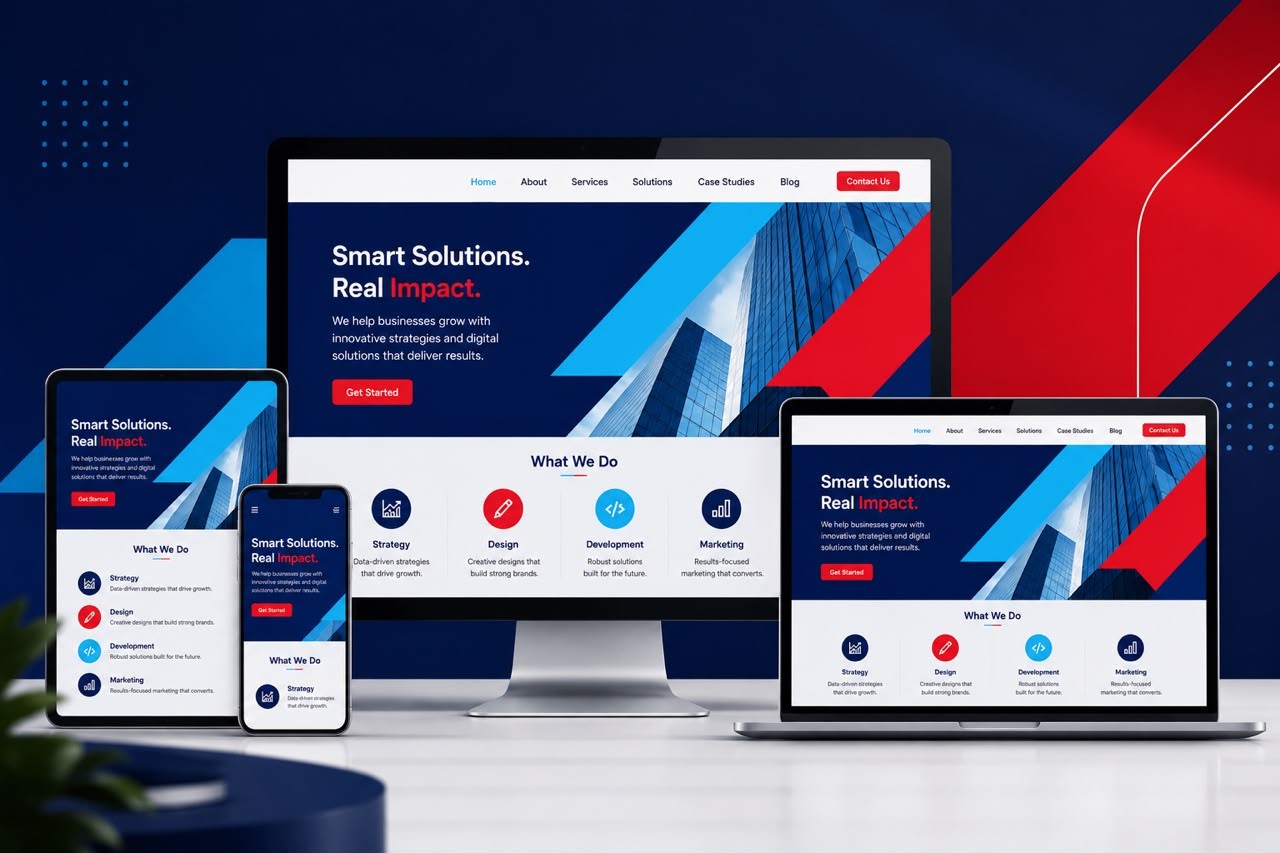
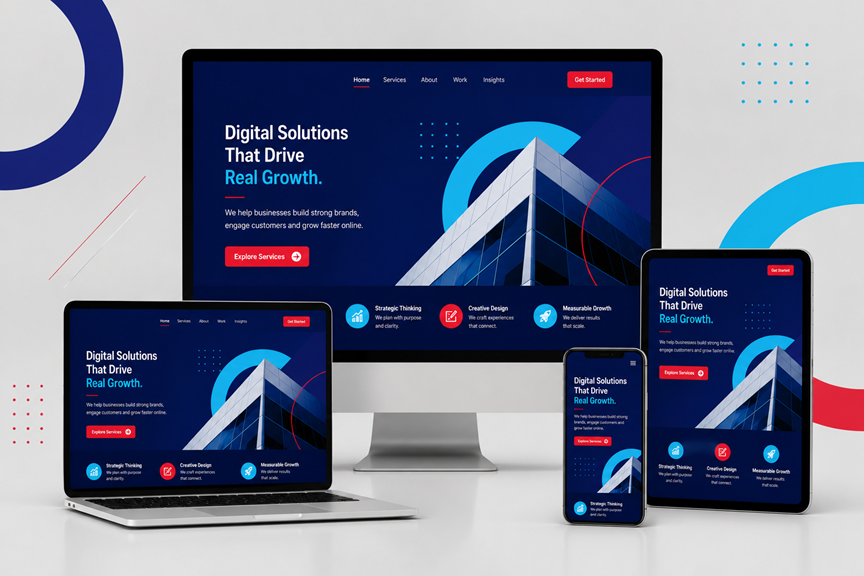
1. Professional Website Design Creates Strong First Impressions

Your website is often the first interaction potential customers have with your business.

A premium business website should be:

  • Visually appealing
  • Easy to navigate
  • Mobile-friendly
  • Fast-loading
  • Professionally branded

When visitors encounter outdated layouts, poor user experience, or inconsistent visuals, trust can decline immediately.

Professional Website Design Creates Strong First Impressions Look More Premium

2. Strong Branding Makes Businesses Look Established

Premium businesses invest in more than just a logo.

They develop:

  • Consistent color systems
  • Typography standards
  • Visual guidelines
  • Messaging frameworks
  • Brand experiences

Strong branding creates recognition and helps customers remember a business long after their first interaction.


3. High-Quality Content Reflects Professionalism

Customers often judge expertise based on the quality of content a business publishes.

Premium brands consistently produce:

  • Valuable blog articles
  • Professional graphics
  • Educational content
  • Case studies
  • Engaging social media posts

Poor-quality content can make even a good business appear less credible.

Ask yourself:

Would a potential client see your content and view your business as an industry expert?

High-Quality Content Reflects Professionalism

4. Consistency Builds Recognition and Trust

One of the biggest differences between premium brands and average brands is consistency.

Premium businesses maintain the same:

  • Visual identity
  • Messaging
  • Tone of voice
  • Customer experience across all platforms.

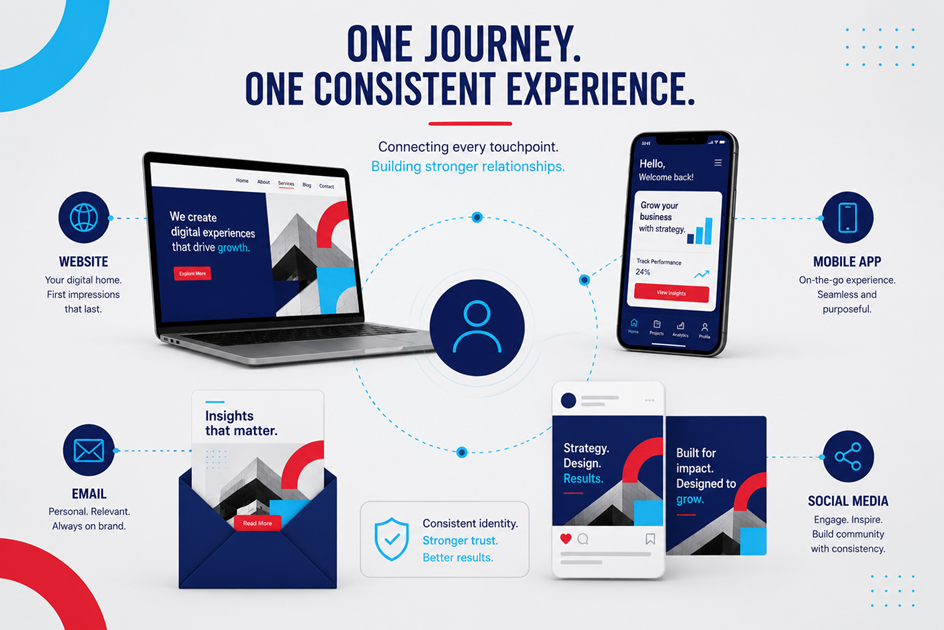
Whether a customer visits:

  • Your website
  • Instagram page
  • LinkedIn profile
  • Email newsletter
  • Presentation deck, the experience feels connected.

Consistency signals professionalism and reliability.

5. Customer Perception Shapes Business Success

Many business decisions are influenced by perception.

Customers often associate premium-looking brands with:

  • Higher quality
  • Greater expertise
  • Better customer service
  • Stronger reliability

This is why two businesses offering similar services can be perceived very differently.

The business with stronger branding, better design, and a more professional online presence often earns trust faster.

Customer Perception Shapes Business Success

6. Premium Brands Focus on the Entire Experience

Looking premium online is not about one element.

It’s the combination of: branding, website design, content quality, consistency, and customer experience.

When these elements work together, they create a brand that feels professional, trustworthy, and memorable.

A premium online presence is not built by accident. It is the result of intentional branding, strategic website design, consistent content, and a customer experience that reflects professionalism at every stage.

Businesses that invest in these areas are more likely to build trust, strengthen recognition, and attract higher-quality clients.

In an increasingly competitive digital landscape, how your business looks online can influence how customers perceive its value long before a conversation begins.

To get professional help and get the right services, you can email us at hello@rtsalvatore.net or call us through 0707079107