
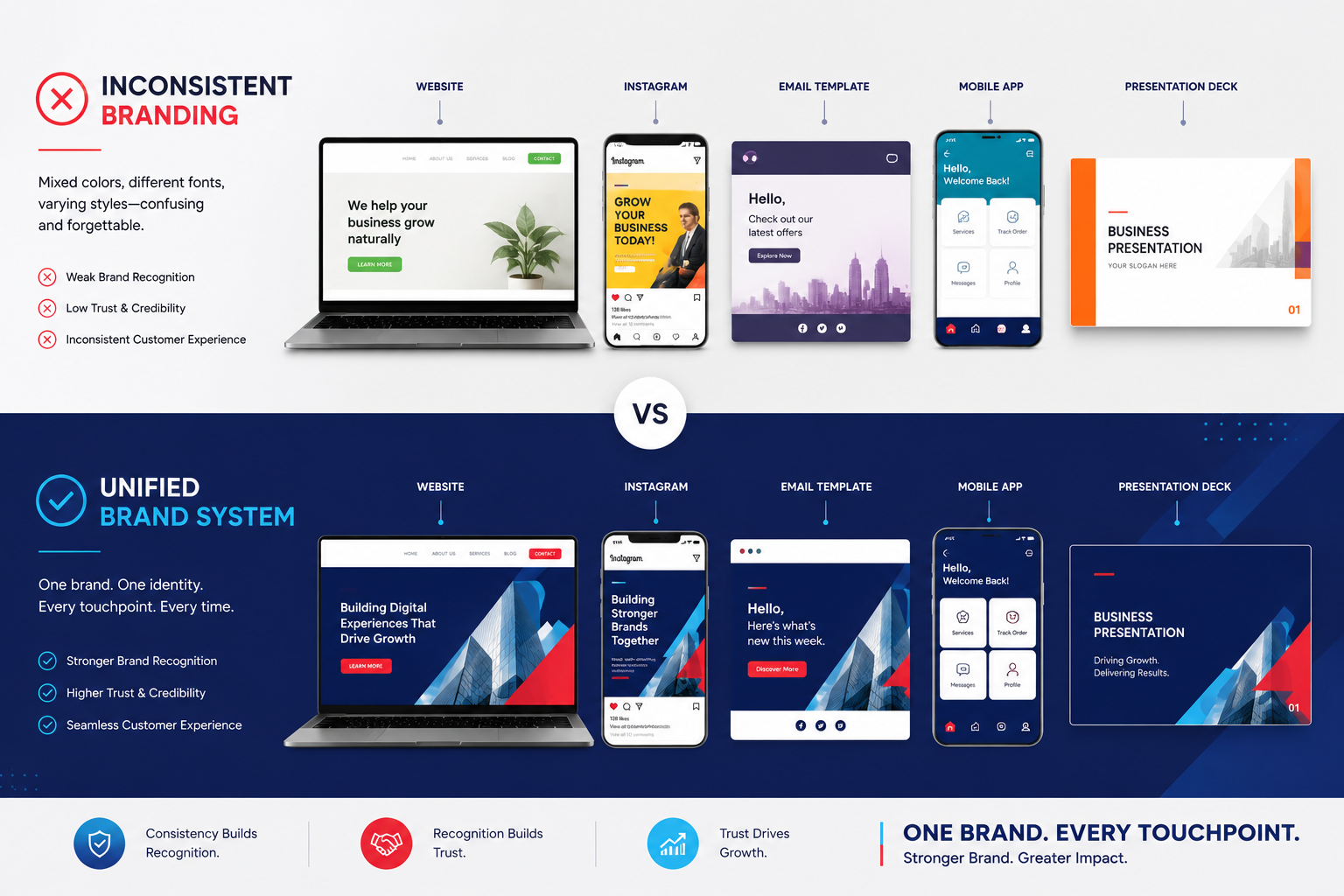
Inconsistent branding is a challenge many businesses underestimate. Companies invest in logos, websites, social media content, and marketing campaigns but often overlook one crucial factor: maintaining a consistent brand identity across every customer touchpoint.
At first glance, inconsistent branding may seem harmless. However, over time, it can affect customer recognition, create confusion, weaken trust, and limit business growth.
The hidden cost of inconsistent branding isn’t always immediately visible, but its long-term effects can significantly influence how customers perceive and engage with your business.
1. Inconsistent Branding Reduces Brand Recognition
One of the primary goals of branding is to make your business memorable.
When customers repeatedly see the same colours, typography, messaging, and visual identity, they begin to recognise and remember your brand more easily.
However, when a business uses different styles across platforms, recognition becomes much harder.
Examples include:
- Different logo variations across channels
- Inconsistent color schemes
- Changing typography frequently
- Different messaging styles
The more inconsistent your branding becomes, the harder it is for customers to identify your business.
2. Customer Confusion Can Hurt Business Growth
Customers should instantly understand who you are and what your business represents.
When branding varies significantly across websites, social media platforms, email campaigns, and advertisements, customers may struggle to connect these experiences to the same company.
Confused customers are less likely to engage, enquire, or make purchasing decisions. Inconsistency creates unnecessary friction in the customer journey.
3. Trust Is Built Through Consistency
Trust is one of the most valuable assets a business can develop. Customers often associate consistency with professionalism, reliability, and competence.
Imagine visiting a company’s website and seeing one visual style, then visiting their social media profiles and encountering completely different branding.
This inconsistency can raise questions:
- Is this the same company?
- Is the business still active?
- How professional are they?
While customers may not consciously identify branding inconsistencies, they often notice when something feels disconnected.
4. Marketing Becomes Less Effective
Marketing efforts become significantly stronger when supported by a recognisable brand.
Every advertisement, social media post, email campaign, and website visit should reinforce the same identity.
Without consistency:
- Campaigns become less memorable
- Brand recall decreases
- Customer trust weakens
- Marketing investments deliver lower returns
Businesses often spend more on advertising while unknowingly reducing its effectiveness through inconsistent branding.
5. Inconsistent Branding Makes It Harder to Look Premium
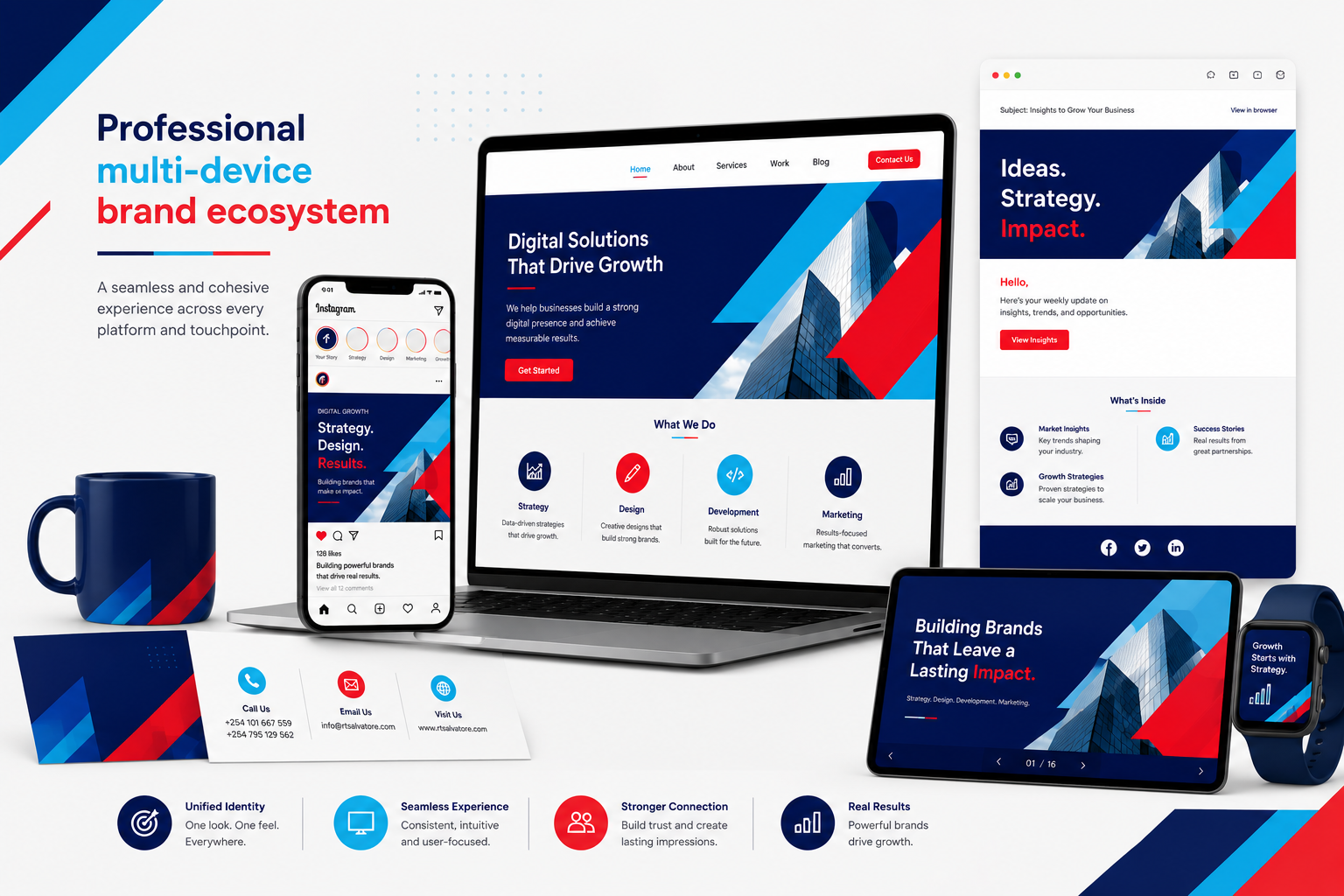
Premium brands rarely leave their identity to chance. Whether customers interact with a website, a presentation, social media content, or an email, the experience feels connected and intentional.
Consistency communicates:
- Professionalism
- Attention to detail
- Credibility
- Authority
Businesses that lack consistency often struggle to create the same premium perception.
6. Long-Term Growth Depends on Strong Brand Equity
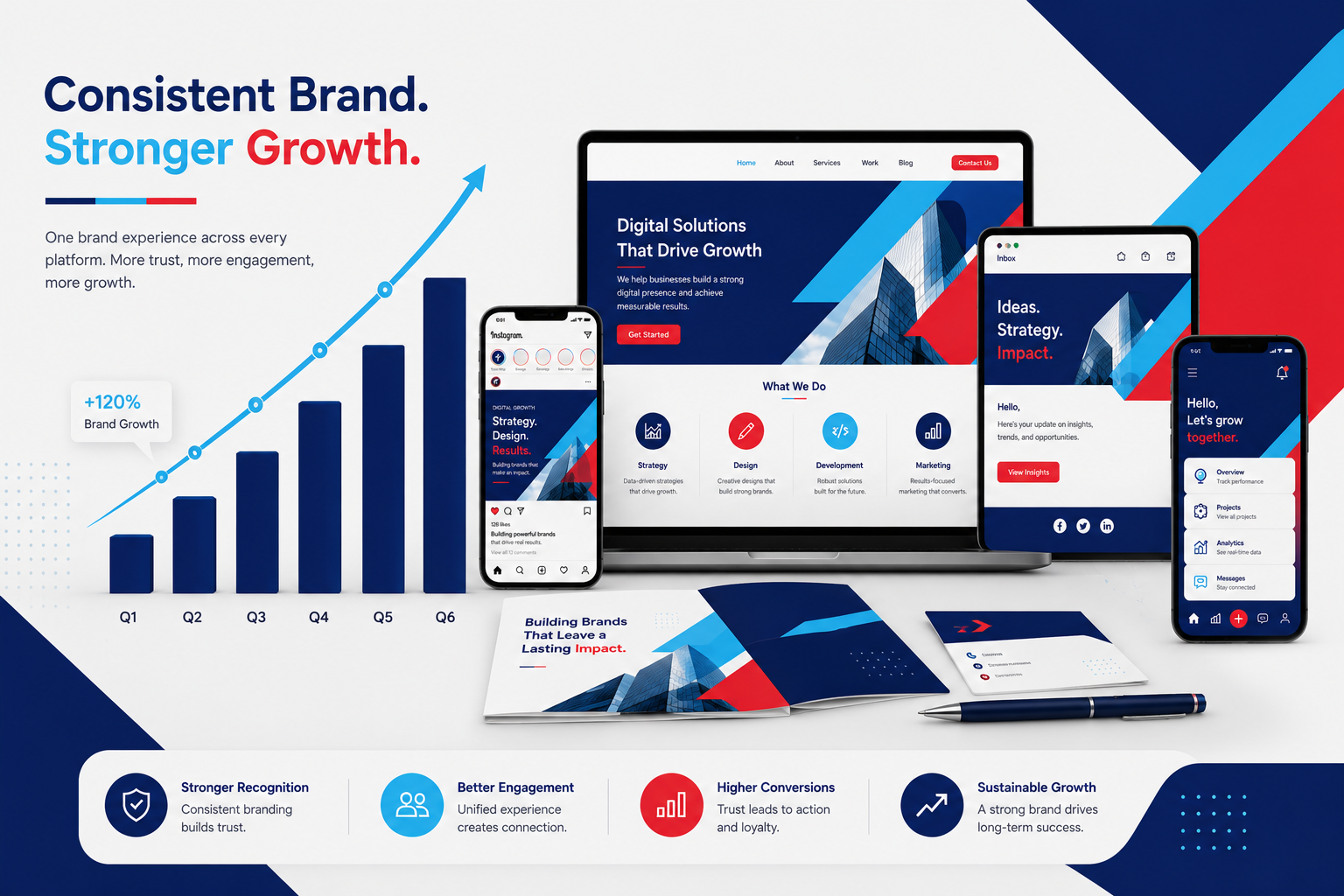
Brand equity refers to the value people associate with your business over time. Every consistent interaction strengthens that value. Every inconsistent interaction weakens it.
As businesses grow, consistency becomes even more important because customers interact with brands across more channels than ever before.
A strong and recognisable brand becomes a competitive advantage that supports:
- Customer loyalty
- Referrals
- Recognition
- Long-term growth
- List
How Businesses Can Improve Branding Consistency
To create a stronger and more recognisable brand:
1. Establish Brand Guidelines
Define:
- Colours
- Typography
- Logo usage
- Visual style
- Messaging standards
2. Maintain Consistency Across Platforms
Ensure every customer touchpoint reflects the same identity.
3. Regularly Audit Brand Assets
Review websites, social media profiles, presentations, and marketing materials for consistency.
4. Invest in Strategic Branding
Treat branding as a business asset rather than a design exercise.
The cost of inconsistent branding extends far beyond visual appearance. It can reduce recognition, confuse customers, weaken trust, lower marketing effectiveness, and limit long-term growth.
Businesses that invest in consistency create stronger customer experiences, build lasting credibility, and position themselves for sustainable success.
In a competitive digital environment, consistency is not simply a branding preference, it is a business advantage.
To get professional help and get the right services, you can email us at hello@rtsalvatore.net or call us through 0707079107