
feature image

How Strong Branding Helps You Charge More

Strong branding does more than make a business look professional, it influences how customers perceive value. In today’s competitive marketplace, businesses with strong branding often find it easier to charge premium prices because customers associate their brand with quality, trust, and credibility.

Many customers are willing to pay more for products or services from brands they recognise and trust. This is why two businesses offering similar solutions can charge vastly different prices. The difference often lies in the strength of their branding.

1. Strong Branding Increases Perceived Value

Customers don’t simply buy products or services, they buy confidence in the outcome.

A strong brand creates a perception of:

  • Quality
  • Expertise
  • Reliability
  • Professionalism

When a business presents itself professionally through consistent branding, customers often perceive its offerings as more valuable.

As a result, pricing becomes less about cost and more about perceived value.

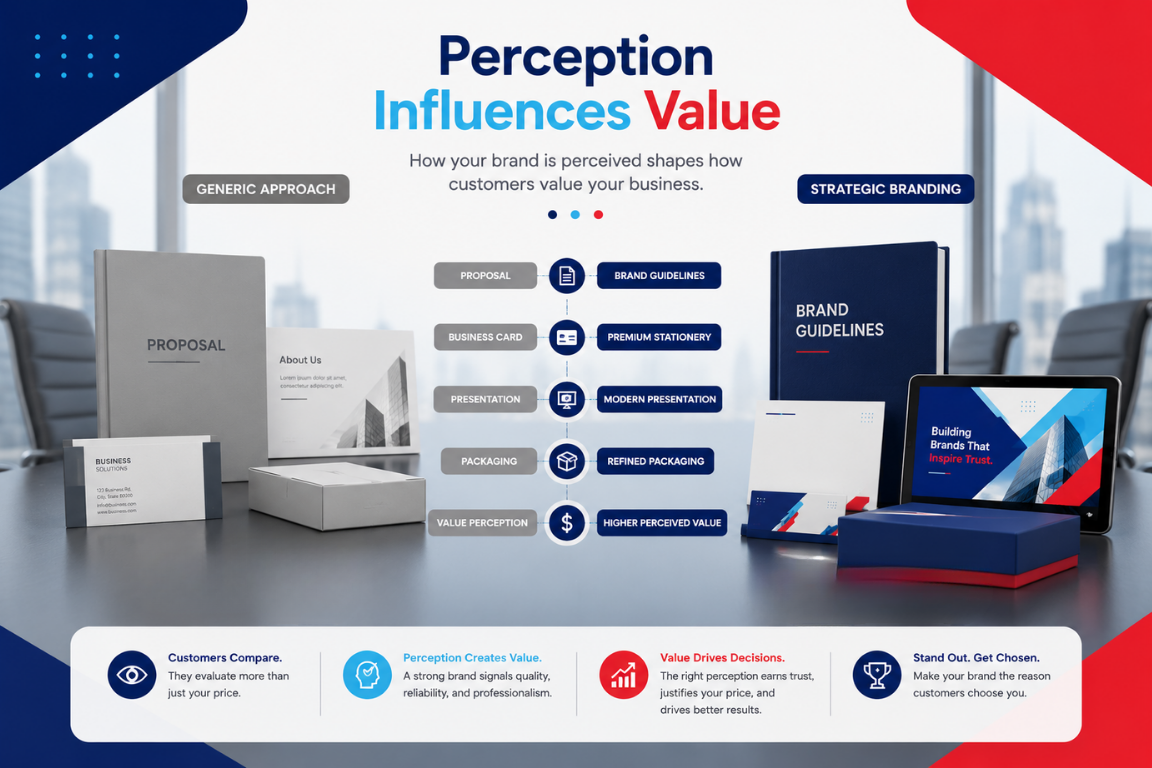
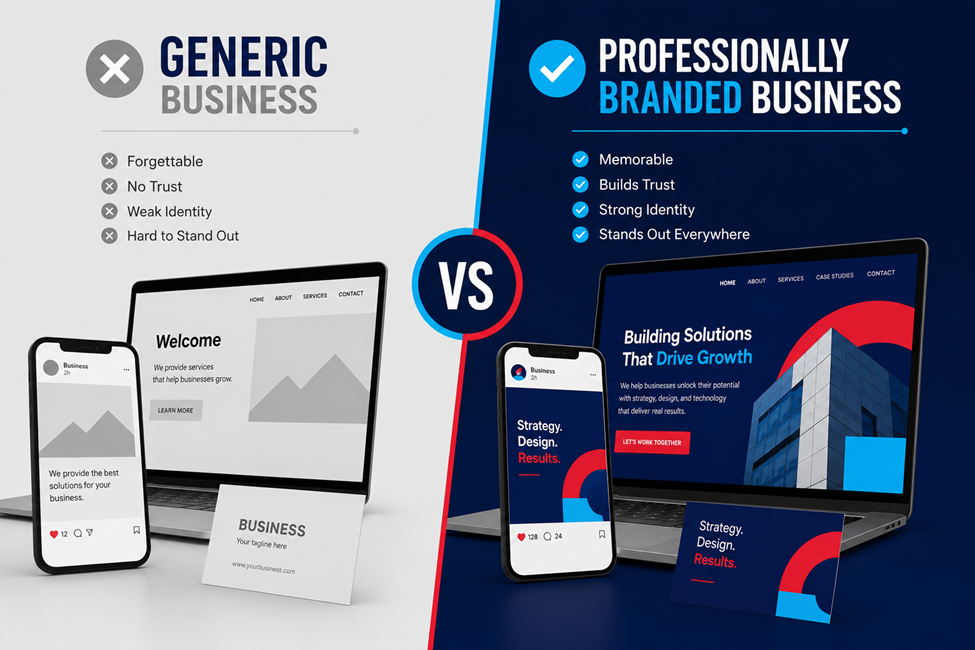
Strong Branding Increases Perceived Value

2. Branding Builds Trust Before the Sale

Trust plays a significant role in purchasing decisions.

Before customers contact your business, they often evaluate:

  • Your website
  • Social media presence
  • Marketing materials
  • Brand identity

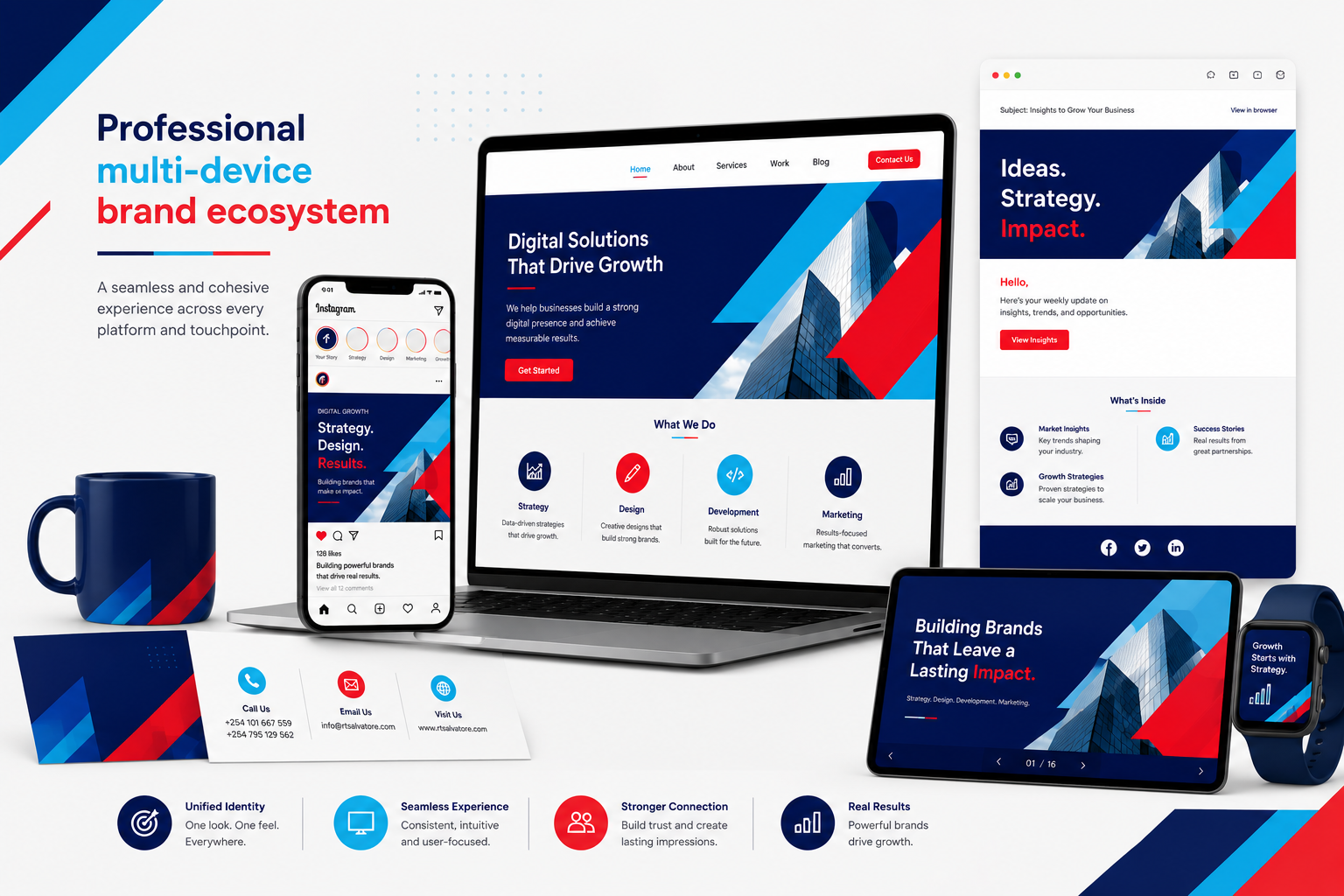
Strong branding creates a professional and consistent experience that reassures potential customers they are dealing with a credible business.

When trust increases, customers become less focused on finding the cheapest option and more focused on choosing the right one.

3. Premium Brands Compete on Value, Not Price

Businesses with weak branding often compete primarily on price.

This creates challenges because:

  • Lower prices reduce profit margins
  • Competitors can easily undercut pricing
  • Customers become price-sensitive

Strong brands position themselves differently.

Instead of competing on affordability, they compete on:

  • Expertise
  • Results
  • Customer experience
  • Reputation

This allows them to justify higher prices while attracting customers who prioritise quality.

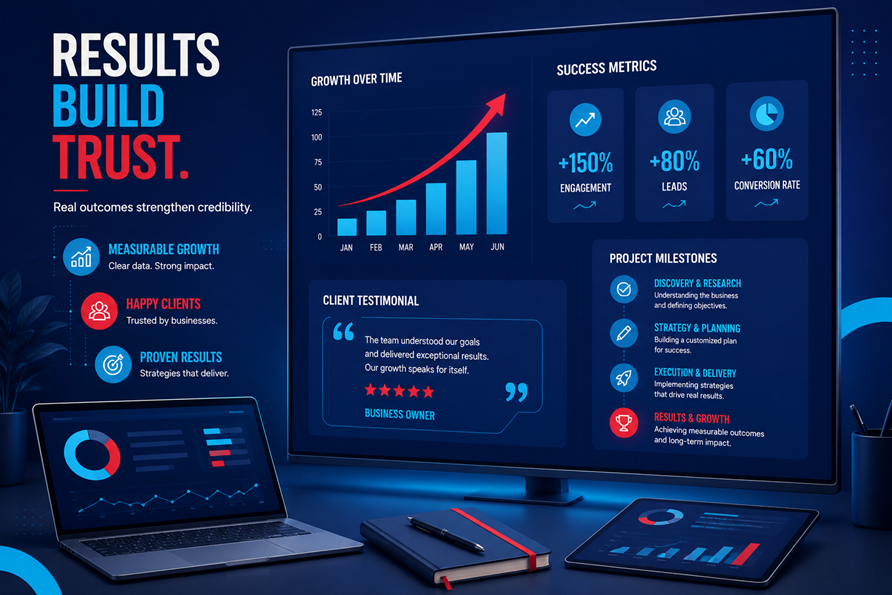
Premium Brands Compete on Value, Not Price

4. Consistency Reinforces Professionalism

Customers expect consistency from businesses they trust.

Strong brands maintain consistent:

  • Visual identity
  • Messaging
  • Tone of voice
  • Customer experience

Whether a customer visits your website, sees your social media content, or receives an email, the experience should feel connected.

Consistency communicates professionalism, which supports premium pricing.

5. Strong Branding Attracts Higher-Quality Clients

Premium branding doesn’t just help businesses charge more, it helps attract better clients.

Businesses with strong branding often appeal to customers who:

  • Value quality
  • Seek expertise
  • Prioritize reliability
  • Are willing to invest in better solutions

These customers are typically less price-sensitive and more interested in long-term value. As a result, strong branding can improve both revenue and client quality.

6. Branding Creates Long-Term Competitive Advantage

Competitors can copy products, services, and pricing strategies. What they cannot easily replicate is a strong brand.

Over time, strong branding contributes to:

  • Customer loyalty
  • Brand recognition
  • Market authority
  • Higher perceived value

These advantages make it easier for businesses to maintain premium pricing while strengthening their market position.

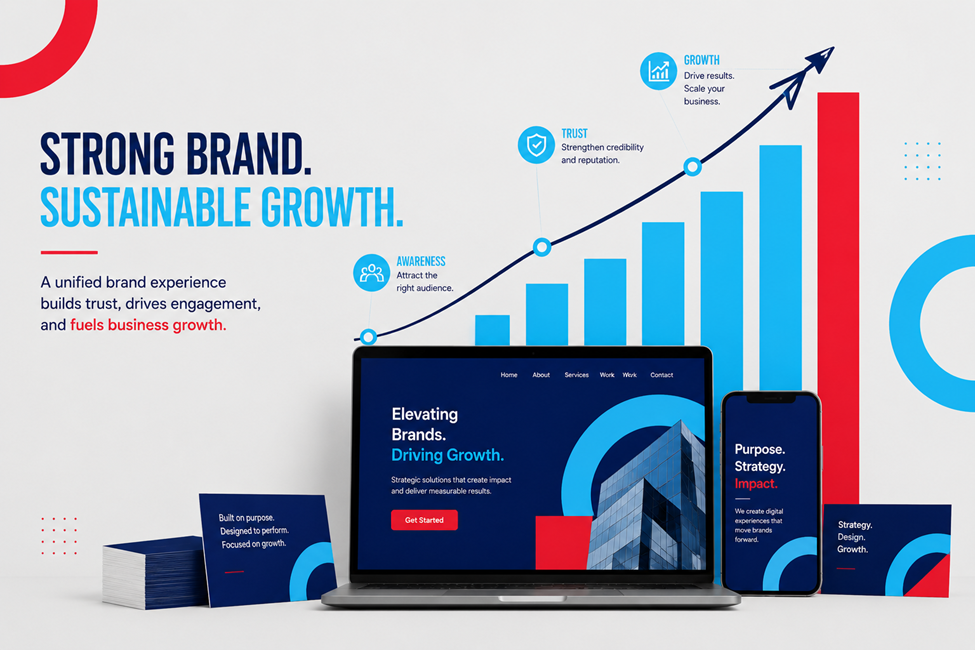
Branding Creates Long-Term Competitive Advantage

How Businesses Can Strengthen Their Brand

To position your business for premium pricing:

Develop a Consistent Brand Identity

Use consistent colours, typography, messaging, and visual assets.

Invest in Professional Website Design

Your website should reflect the quality of your business.

Create High-Quality Content

Publish content that demonstrates expertise and builds trust.

Focus on Customer Experience

Every interaction should reinforce professionalism and value.

Maintain Brand Consistency

Consistency helps customers recognise and trust your business.

Strong branding is one of the most powerful tools a business can use to increase perceived value and justify premium pricing.

When customers trust your brand, recognise your expertise, and associate your business with quality, price becomes less of a deciding factor. Instead of competing on cost alone, businesses with strong branding compete on value, credibility, and customer experience.

In today’s digital marketplace, investing in branding is not simply about looking good, it is about creating a business that customers trust, remember, and are willing to pay more for.

To get professional help and get the right services, you can email us at hello@rtsalvatore.net or call us through 0707079107.
feature image

Inconsistent Branding: The Silent Business Growth Killer

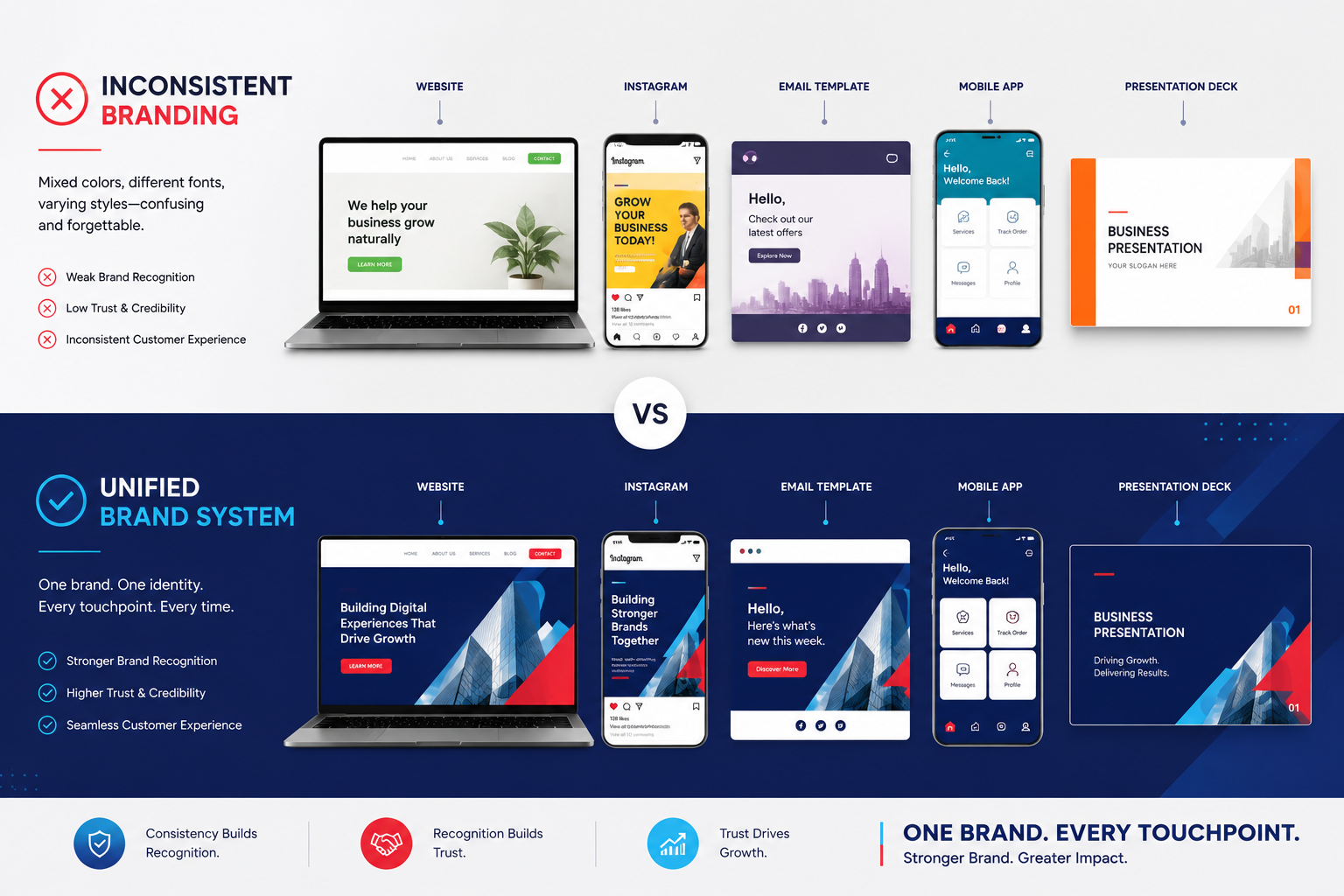
Inconsistent branding is a challenge many businesses underestimate. Companies invest in logos, websites, social media content, and marketing campaigns but often overlook one crucial factor: maintaining a consistent brand identity across every customer touchpoint.

At first glance, inconsistent branding may seem harmless. However, over time, it can affect customer recognition, create confusion, weaken trust, and limit business growth.

The hidden cost of inconsistent branding isn’t always immediately visible, but its long-term effects can significantly influence how customers perceive and engage with your business.


1. Inconsistent Branding Reduces Brand Recognition

One of the primary goals of branding is to make your business memorable.

When customers repeatedly see the same colours, typography, messaging, and visual identity, they begin to recognise and remember your brand more easily.

However, when a business uses different styles across platforms, recognition becomes much harder.

Examples include:

  • Different logo variations across channels
  • Inconsistent color schemes
  • Changing typography frequently
  • Different messaging styles

The more inconsistent your branding becomes, the harder it is for customers to identify your business.

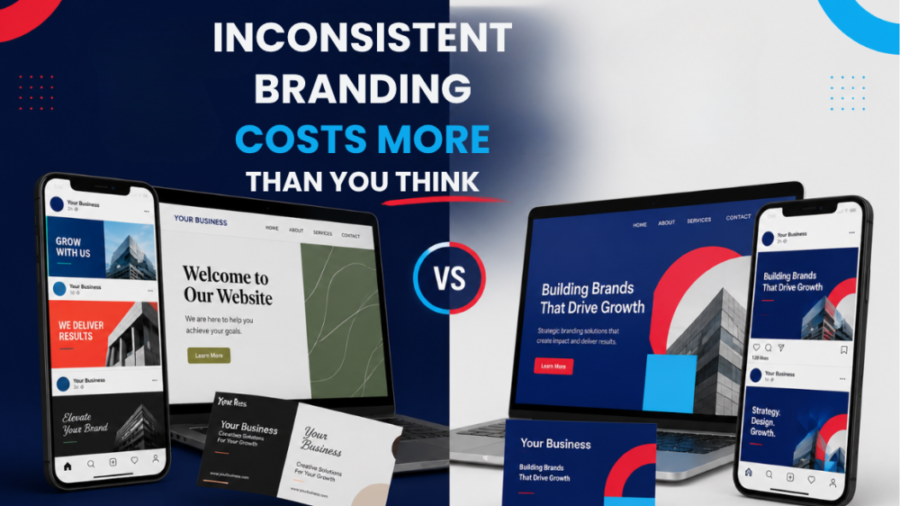
Inconsistent Branding Reduces Brand Recognition


2. Customer Confusion Can Hurt Business Growth

Customers should instantly understand who you are and what your business represents.

When branding varies significantly across websites, social media platforms, email campaigns, and advertisements, customers may struggle to connect these experiences to the same company.

Confused customers are less likely to engage, enquire, or make purchasing decisions. Inconsistency creates unnecessary friction in the customer journey.


3. Trust Is Built Through Consistency

Trust is one of the most valuable assets a business can develop. Customers often associate consistency with professionalism, reliability, and competence.

Imagine visiting a company’s website and seeing one visual style, then visiting their social media profiles and encountering completely different branding.

This inconsistency can raise questions:

  • Is this the same company?
  • Is the business still active?
  • How professional are they?

While customers may not consciously identify branding inconsistencies, they often notice when something feels disconnected.

Trust Is Built Through Consistency


4. Marketing Becomes Less Effective

Marketing efforts become significantly stronger when supported by a recognisable brand.

Every advertisement, social media post, email campaign, and website visit should reinforce the same identity.

Without consistency:

  • Campaigns become less memorable
  • Brand recall decreases
  • Customer trust weakens
  • Marketing investments deliver lower returns

Businesses often spend more on advertising while unknowingly reducing its effectiveness through inconsistent branding.

5. Inconsistent Branding Makes It Harder to Look Premium

Premium brands rarely leave their identity to chance. Whether customers interact with a website, a presentation, social media content, or an email, the experience feels connected and intentional.

Consistency communicates:

  • Professionalism
  • Attention to detail
  • Credibility
  • Authority

Businesses that lack consistency often struggle to create the same premium perception.

6. Long-Term Growth Depends on Strong Brand Equity

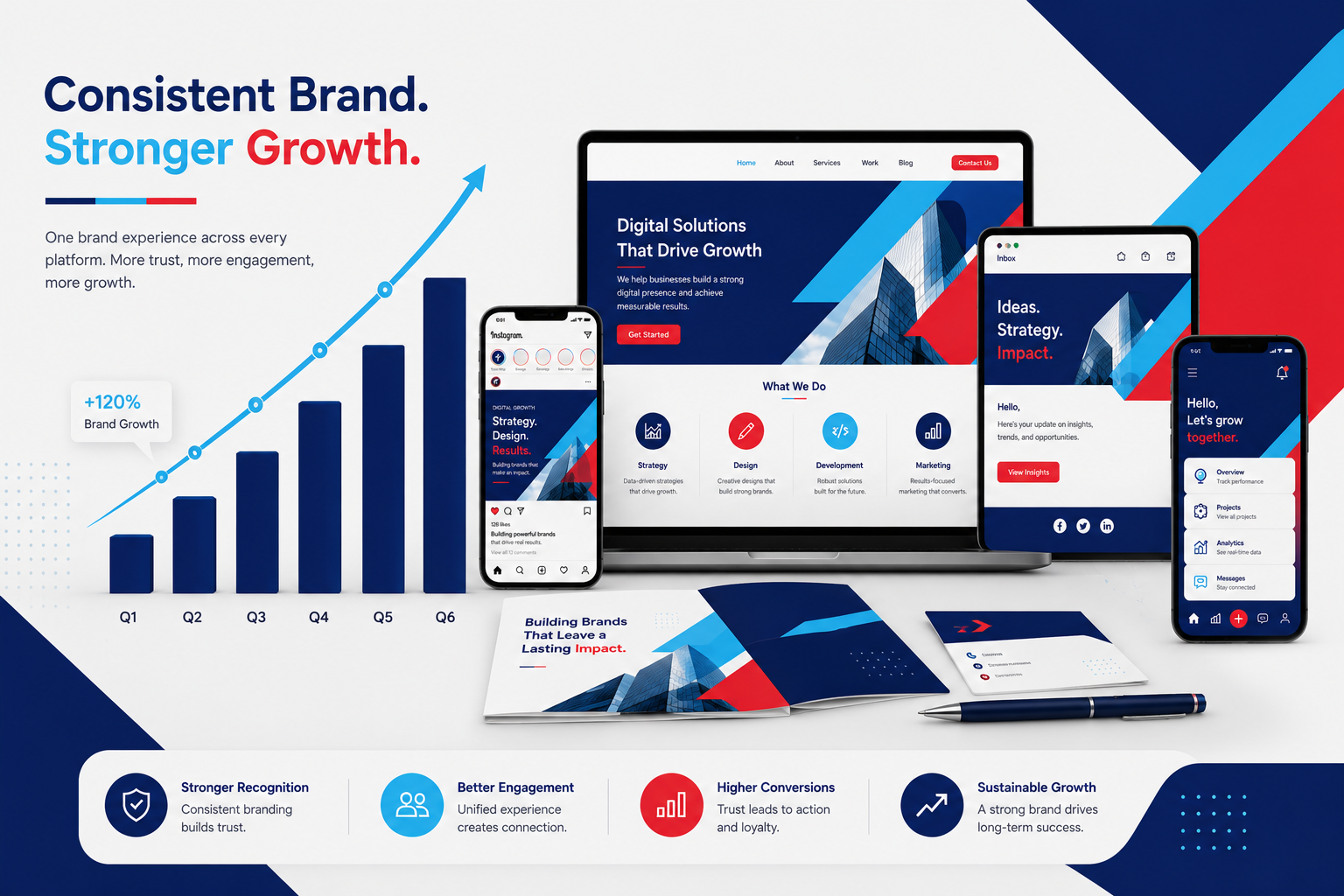
Brand equity refers to the value people associate with your business over time. Every consistent interaction strengthens that value. Every inconsistent interaction weakens it.

As businesses grow, consistency becomes even more important because customers interact with brands across more channels than ever before.

A strong and recognisable brand becomes a competitive advantage that supports:

  • Customer loyalty
  • Referrals
  • Recognition
  • Long-term growth
  • List
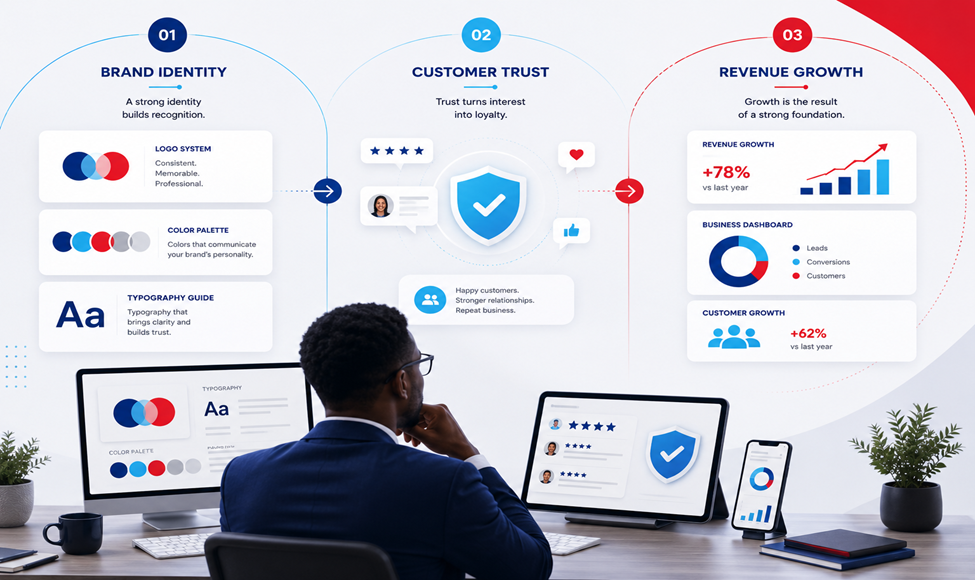
Long-Term Growth Depends on Strong Brand Equity

How Businesses Can Improve Branding Consistency

To create a stronger and more recognisable brand:

1.     Establish Brand Guidelines

Define:

  • Colours
  • Typography
  • Logo usage
  • Visual style
  • Messaging standards

2.     Maintain Consistency Across Platforms

Ensure every customer touchpoint reflects the same identity.

3.     Regularly Audit Brand Assets

Review websites, social media profiles, presentations, and marketing materials for consistency.

4.     Invest in Strategic Branding

Treat branding as a business asset rather than a design exercise.

The cost of inconsistent branding extends far beyond visual appearance. It can reduce recognition, confuse customers, weaken trust, lower marketing effectiveness, and limit long-term growth.

Businesses that invest in consistency create stronger customer experiences, build lasting credibility, and position themselves for sustainable success.

In a competitive digital environment, consistency is not simply a branding preference, it is a business advantage.

To get professional help and get the right services, you can email us at hello@rtsalvatore.net or call us through 0707079107

feature image

How to Make Your Business Look More Premium and Professional Online

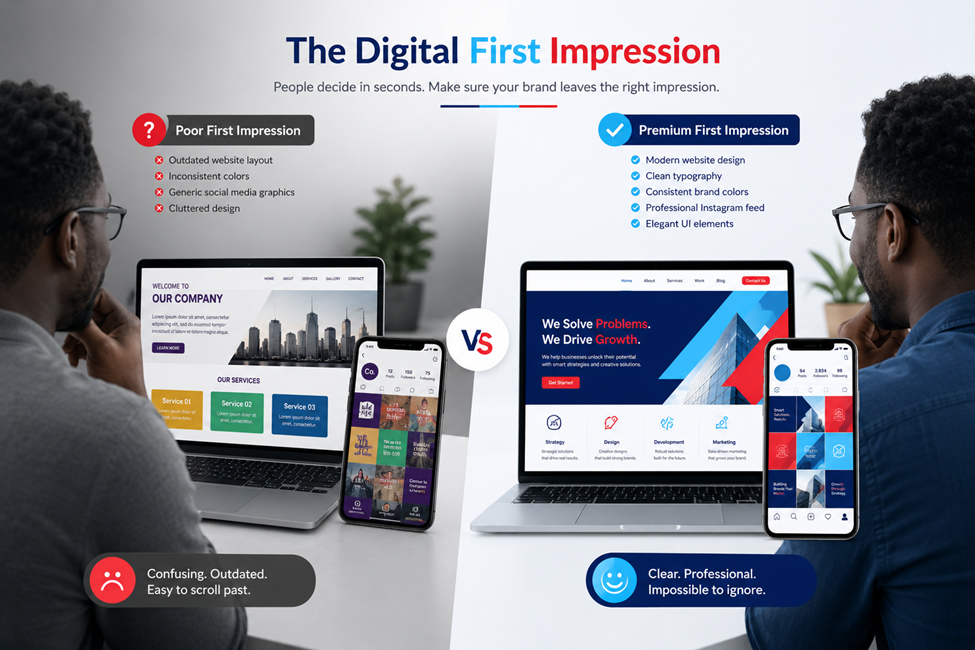
In today’s digital world, customers often form opinions about a business before making contact. Within seconds of visiting a website, viewing social media profiles, or seeing marketing materials, people begin judging credibility, professionalism, and whether a company presents itself as a premium business.

The question is: what makes one business appear premium while another looks average?

The answer goes beyond having a logo or a website. Premium brands create a consistent, professional experience across every customer touchpoint, helping them build trust, recognition, and a stronger market presence.

1. Professional Website Design Creates Strong First Impressions

Your website is often the first interaction potential customers have with your business.

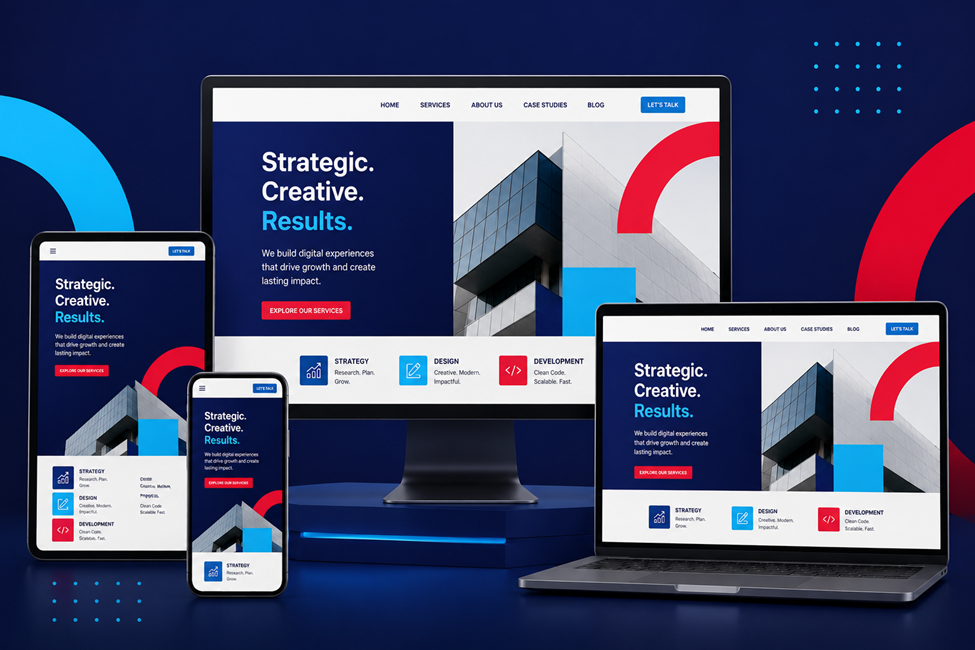
A premium business website should be:

  • Visually appealing
  • Easy to navigate
  • Mobile-friendly
  • Fast-loading
  • Professionally branded

When visitors encounter outdated layouts, poor user experience, or inconsistent visuals, trust can decline immediately.

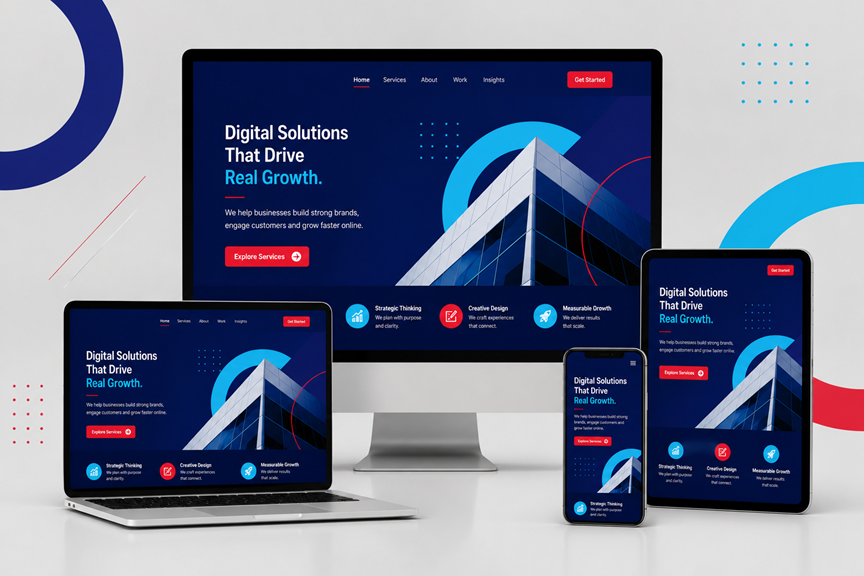
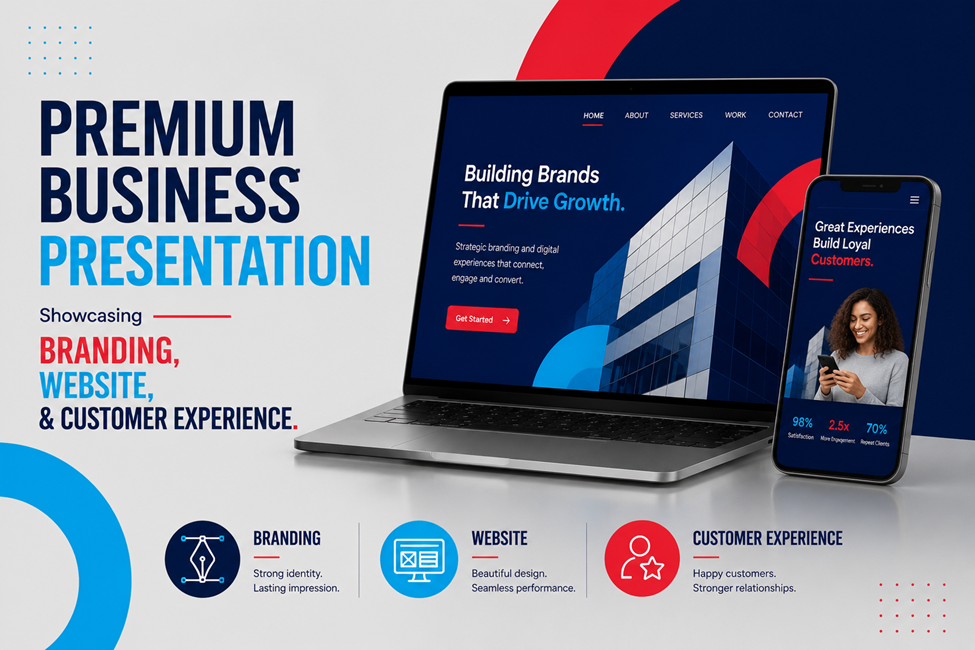
Professional Website Design Creates Strong First Impressions Look More Premium

2. Strong Branding Makes Businesses Look Established

Premium businesses invest in more than just a logo.

They develop:

  • Consistent color systems
  • Typography standards
  • Visual guidelines
  • Messaging frameworks
  • Brand experiences

Strong branding creates recognition and helps customers remember a business long after their first interaction.


3. High-Quality Content Reflects Professionalism

Customers often judge expertise based on the quality of content a business publishes.

Premium brands consistently produce:

  • Valuable blog articles
  • Professional graphics
  • Educational content
  • Case studies
  • Engaging social media posts

Poor-quality content can make even a good business appear less credible.

Ask yourself:

Would a potential client see your content and view your business as an industry expert?

High-Quality Content Reflects Professionalism

4. Consistency Builds Recognition and Trust

One of the biggest differences between premium brands and average brands is consistency.

Premium businesses maintain the same:

  • Visual identity
  • Messaging
  • Tone of voice
  • Customer experience across all platforms.

Whether a customer visits:

  • Your website
  • Instagram page
  • LinkedIn profile
  • Email newsletter
  • Presentation deck, the experience feels connected.

Consistency signals professionalism and reliability.

5. Customer Perception Shapes Business Success

Many business decisions are influenced by perception.

Customers often associate premium-looking brands with:

  • Higher quality
  • Greater expertise
  • Better customer service
  • Stronger reliability

This is why two businesses offering similar services can be perceived very differently.

The business with stronger branding, better design, and a more professional online presence often earns trust faster.

Customer Perception Shapes Business Success

6. Premium Brands Focus on the Entire Experience

Looking premium online is not about one element.

It’s the combination of: branding, website design, content quality, consistency, and customer experience.

When these elements work together, they create a brand that feels professional, trustworthy, and memorable.

A premium online presence is not built by accident. It is the result of intentional branding, strategic website design, consistent content, and a customer experience that reflects professionalism at every stage.

Businesses that invest in these areas are more likely to build trust, strengthen recognition, and attract higher-quality clients.

In an increasingly competitive digital landscape, how your business looks online can influence how customers perceive its value long before a conversation begins.

To get professional help and get the right services, you can email us at hello@rtsalvatore.net or call us through 0707079107